Designing effective lighting in large industrial spaces is essential for both safety and productivity. Understanding how to design lighting for large industrial spaces involves more than just placing fixtures strategically. It requires a careful consideration of the specific activities taking place, the layout of the area, and the types of equipment being used.
The right lighting can enhance visibility and improve morale among workers. Poor lighting can lead to accidents and reduce efficiency. A balanced approach combines both functional and ambient lighting. For instance, bright task lighting may be needed near machinery, while softer ambient lighting can improve overall atmosphere.
It is a complex task that benefits from expertise. Engaging with professionals can ensure that lighting solutions meet regulatory standards and safety protocols. However, there is no one-size-fits-all solution. Each industrial space has unique challenges that may require customized lighting plans. It’s important to reflect on past decisions and adapt based on what works and what needs improvement.
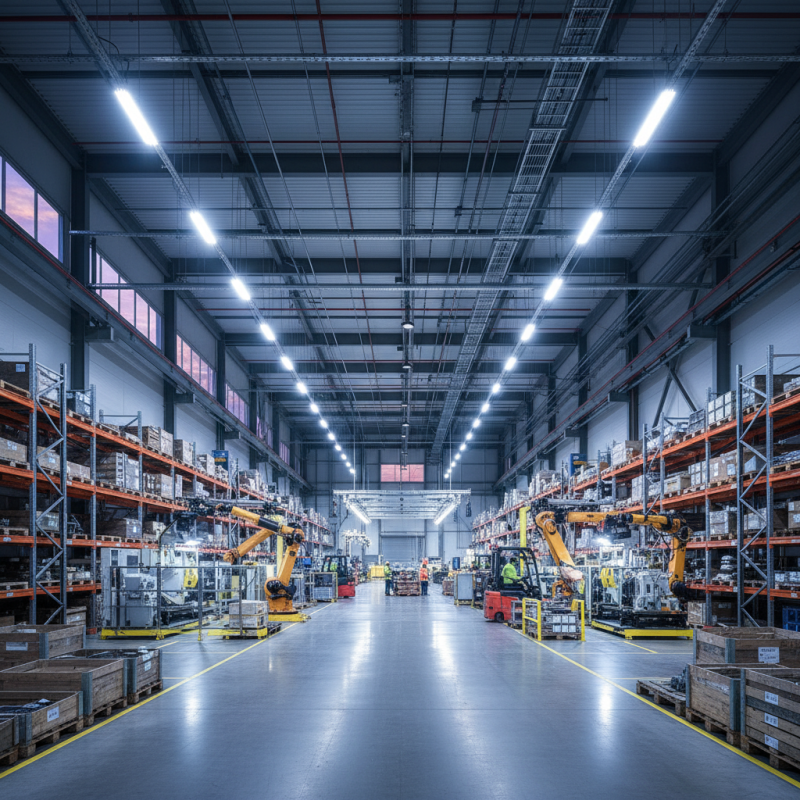
Designing lighting for large industrial spaces requires careful consideration of specific needs. The scale of such environments often leads to unique challenges. Bright, uniform lighting is essential for safety. Workers need clarity to perform tasks effectively.
High ceilings often mean that light must reach greater distances. This can lead to uneven lighting zones if not addressed properly. Effective lighting plans should include a mix of direct and indirect light sources. LEDs are energy-efficient and have a longer lifespan, making them a popular choice.
Another critical aspect is to reduce glare and shadows. Unwanted shadows can hinder productivity. Installing diffusers or using light fixtures with proper placement can help manage these issues. However, over-reliance on technology can lead to neglecting human-centered design. Always consider worker feedback to improve lighting designs. Even minor adjustments based on user experiences can make a significant difference.
Designing lighting for large industrial spaces requires careful consideration. Selecting the right type of lighting fixtures is essential for both efficiency and safety. LED fixtures are often favored for their longevity and low energy consumption. However, it's crucial to assess the specific needs of the space. High ceilings may require fixtures with greater lumen output to ensure adequate illumination.
Safety is paramount in any industrial setting. Poor lighting can lead to accidents and decreased productivity. Fixtures should provide uniform light distribution while minimizing shadows. Incorporating motion sensors can enhance safety by ensuring lights are only on when needed. Regular maintenance of lighting systems is vital. Burnt-out bulbs or faulty fixtures can create unsafe conditions.
While aiming for optimal lighting, be mindful of glare. Increased glare can lead to discomfort and decreased visibility. Using diffusers or choosing fixtures with low-glare options can help mitigate this issue. It's valuable to seek feedback from employees regarding lighting conditions. Sometimes, what appears ideal can have unexpected shortcomings. Regular assessments and adaptations are key to maintaining a safe and efficient work environment.
Lighting in large industrial spaces requires a thoughtful approach to meet various operational needs. Optimization of light levels enhances safety and productivity. First, evaluate specific tasks and areas. For instance, assembly lines demand brighter lights, while storage areas may require lower illumination. Incorrect lighting choices can lead to accidents or contamination.
High ceilings pose challenges in achieving uniform light levels. Consider using high bay lights for greater height. But these often cause shadows, obscuring details. Balance is crucial. In areas with intricate tasks, supplements like task lighting may fill the gaps. This prevents strain and improves accuracy.
Also, consider the color temperature of lights. Bright, cool lights can boost alertness in active work areas. However, warmer tones are preferable in break rooms for comfort. Workers need a balance of focus and rest. Regular assessments of the lighting effectiveness are vital. Over time, needs change; staying adaptable can maintain an optimal environment.
Incorporating smart lighting technology in large industrial spaces can drastically improve efficiency and control. According to a 2021 report by the International Energy Agency, smart lighting can reduce energy consumption by up to 30%. This technology allows for real-time adjustments, enhancing visibility and safety in work environments.
One effective tip is to use sensors. Occupancy sensors can automatically adjust lighting based on the presence of workers, ensuring lights are only on when needed. This not only cuts costs but also extends the lifespan of the lighting fixtures. Additionally, integrating daylight sensors can optimize natural light usage, reducing dependency on artificial lighting during the day.
Consider implementing a centralized control system. This system allows for easy monitoring and adjustments. It enables facility managers to create lighting schedules tailored to specific tasks. However, it requires adequate training for staff to ensure effective use. Communication between the design team and end users is crucial for the successful implementation of these systems.
| Tip Number | Design Element | Recommended Technology | Benefits |
|---|---|---|---|
| 1 | Layered Lighting | LED Fixtures | Energy-efficient with adjustable brightness |
| 2 | Control Systems | Smart Lighting Controls | Improved flexibility and automation |
| 3 | Natural Light Integration | Smart Sensors | Reduces energy use by adapting to daylight |
| 4 | Task Lighting | Dimmable LEDs | Enhances visibility and productivity |
| 5 | Emergency Lighting | Emergency LED Systems | Ensures safety during outages |
When designing lighting for large industrial spaces, maintenance considerations play a key role. A well-designed lighting plan should not only focus on initial costs but also on long-term efficiency. According to the U.S. Department of Energy, lighting accounts for about 20% of total industrial energy consumption. Therefore, energy-efficient lighting choices can significantly reduce overhead costs.
Regular maintenance is essential. Neglect can lead to increased energy use and reduced productivity. A study by the Illuminating Engineering Society emphasizes that proper maintenance can improve lighting performance and lifespan by as much as 30%. Incorporating smart lighting systems helps monitor usage and detect failures, allowing for timely repairs and minimizing downtime.
Tip 1: Use LED fixtures for their durability and low maintenance needs. They can last up to 25 times longer than traditional bulbs.
Tip 2: Implement a lighting audit. Assess current performance and identify areas needing improvement.
Anticipating future growth is another consideration. Lighting layouts should be flexible, accommodating changes without major overhauls. Ignoring these factors may lead to increased costs and inefficiencies.
: Large industrial spaces require bright, uniform lighting for safety and effective task performance.
Use a mix of direct and indirect light sources and consider high bay lights to manage height challenges.
Glare and shadows can hinder productivity and lead to accidents or errors in task execution.
Assembly lines need brighter lights, while storage areas benefit from lower illumination levels.
Smart lighting can reduce energy consumption, improve safety, and allow real-time adjustments based on needs.
Occupancy sensors adjust lighting based on worker presence, saving energy and prolonging fixture lifespan.
Worker feedback helps ensure that lighting meets their needs, leading to better safety and productivity.
Regular assessments are vital as needs change over time; staying adaptable is key for optimal environments.
A centralized system enables easy monitoring, tailored schedules, and efficient adjustments for specific tasks.
Over-reliance can lead to neglect of human-centered design and may overlook practical worker experiences.
When exploring how to design lighting for large industrial spaces, it is essential to understand the unique requirements of these environments. This involves selecting appropriate lighting fixtures that prioritize efficiency and safety, ensuring that various tasks and areas within the industrial setting receive optimal light levels. Incorporating smart lighting technology can further enhance control and adaptability, allowing for a more tailored lighting solution.
Additionally, a comprehensive lighting plan should consider cost-effectiveness and maintenance. This aspect is crucial in minimizing long-term expenses while ensuring that lighting systems remain functional and effective. By focusing on these elements, industries can create a well-lit environment that promotes safety, productivity, and energy efficiency.

Lume Light