Choosing the right outdoor lighting can be a daunting task. When exploring options for illumination, it’s crucial to understand what is the difference between flood lights and area lights. These two types of lighting serve distinct purposes, yet many people use them interchangeably.
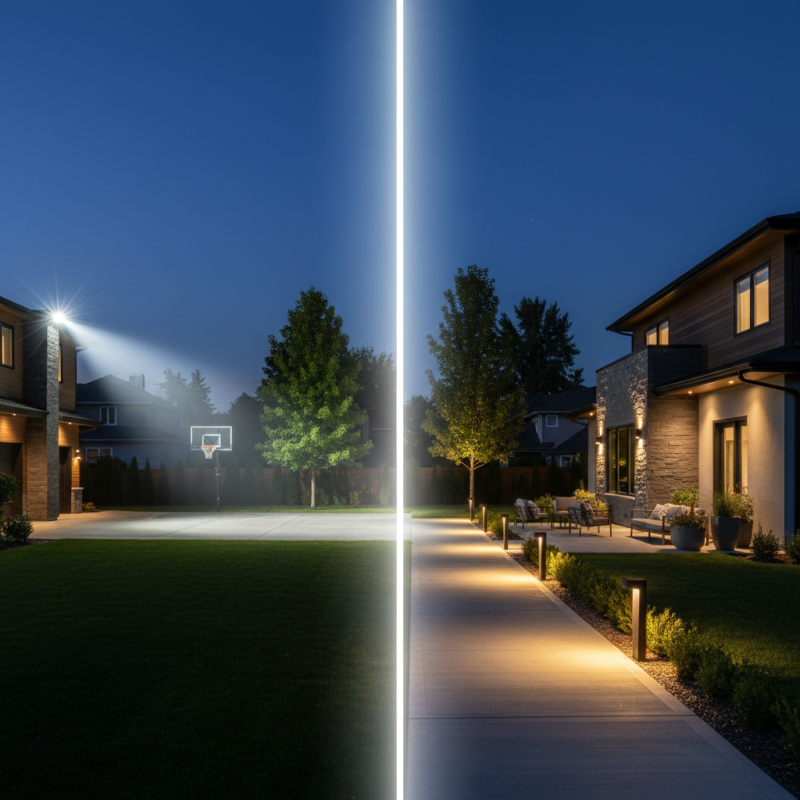
Flood lights are ideal for illuminating large, open spaces. They cast broad beams of light, making them perfect for security and visibility. They can light up driveways, backyards, or even sports fields. Area lights, on the other hand, provide consistent light over a specific area. They are commonly used in parking lots or pathways. While both options enhance safety and functionality, their application varies greatly.
Reflecting on your specific needs is key. What are you lighting? How much light do you require? Flood lights can overwhelm a small area with brightness, while area lights might be insufficient for larger spaces. Understanding these differences ensures you choose the right tool for your lighting needs. Take the time to assess your situation carefully.
Factors to Consider When Choosing Flood Lights vs. Area Lights
When choosing between flood lights and area lights, consider your specific lighting needs. Flood lights are designed for illumination over wider areas, making them ideal for outdoor settings such as sports fields or large parking lots. A study by the International Association of Lighting Designers noted these lights effectively cover spaces with illumination levels reaching 100 lux in open areas. Meanwhile, area lights provide focused lighting for smaller zones, making them well-suited for pathways and entrances.
Another factor is energy efficiency. According to the U.S. Department of Energy's report, LED flood lights can reduce energy costs by approximately 75% compared to traditional incandescent bulbs. However, the installation and operational costs of area lights may be lower over time due to their specific application. You must weigh initial costs against long-term savings.
Consider the positioning and security aspects too. Flood lights often face challenges with aimed direction, leading to light pollution. Proper placement is essential to avoid such issues. Area lights, while providing targeted illumination, may not cover vast spaces and could leave dark spots. Analyzing your environment and its unique requirements will guide your decision-making process.
Key Differences Between Flood Lights and Area Lights Explained
When considering outdoor lighting, flood lights and area lights serve distinct purposes. Flood lights produce a wide beam of light, ideal for illuminating large areas. They are often used for security and safety. A residential backyard can benefit significantly from flood lights, making it well-lit for evening gatherings.
On the other hand, area lights provide focused illumination. They are typically designed for parking lots and roadways. Their light distribution is more controlled and often directed downward. This minimizes light pollution and ensures clarity in specific locations. Picture a parking lot with area lights guiding drivers safely to their spots.
Choosing between the two can be tricky. Assess the purpose of your lighting. If the goal is vast coverage, flood lights may be suitable. However, if you need to illuminate specific spots without overwhelming brightness, area lights are the better choice. Evaluating your needs in detail will lead to the right decision.
Cost Analysis: Flood Lights vs. Area Lights for Large Spaces
When considering outdoor lighting for large spaces, cost is a significant factor.
Flood lights and area lights have distinct price points and applications.
Flood lights typically provide intense illumination over broad areas, making them ideal for sports fields or construction sites.
Their higher wattage often translates to increased energy costs.
On the flip side, area lights are designed for uniform lighting across expansive areas, like parking lots.
These can be more economical to operate in the long run.
Installation costs vary as well.
Flood lights may require more complex setups, especially when illuminating large spaces at greater heights.
This complexity adds labor costs.
Area lights, with their more straightforward installation process, can save on both manpower and time.
Maintenance is another factor to consider; while flood lights may need replacement bulbs more frequently, area lights often boast longer lifespans.
Ultimately, the choice comes down to specific needs and budget constraints.
Evaluating the initial costs alongside long-term energy use helps determine the better option.
Balancing these factors with the desired lighting quality can improve decision-making.
Reflecting on the varied applications and operating costs fosters a clearer understanding for large space lighting.
Efficiency Ratings: Lumens per Watt in Flood Lights and Area Lights
When it comes to choosing between flood lights and area lights, efficiency ratings play a crucial role. One key metric to consider is lumens per watt. This measurement indicates how much light you receive for each watt of electricity used.
Flood lights typically focus on delivering a high intensity beam over a wide area. They often achieve higher lumens per watt ratings due to their design and purpose.
In contrast, area lights provide more dispersed lighting. This can result in lower lumens per watt, but they are ideal for illuminating specific spaces evenly. When selecting lights, the efficiency rating matters. You may prefer flood lights for sports fields or large outdoor events, where powerful light is needed. However, if you want a well-lit parking lot or pathway, area lights might be the better choice.
It's important to consider how you'll use these lights. Not all situations require maximum brightness. Sometimes, a softer glow achieves better visibility without overpowering the space. Reflecting on your specific needs can guide your decision. Always balance efficiency with practicality to make the right choice for your lighting project.
Common Applications for Flood Lights and Area Lights in Various Industries
Flood lights and area lights serve distinct purposes across various industries. In sports venues, flood lights illuminate expansive fields, enabling athletes to perform under optimal conditions. A report from the International Association of Lighting Designers highlights that proper lighting can enhance performance by up to 20%. Proper illumination is crucial for safety, especially in industrial settings. Here, area lights are often deployed to ensure workers' safety during nighttime operations. These lights provide even coverage, reducing the risk of accidents.
In commercial lots, both lighting types find their place. Flood lights are frequently used for security purposes. According to the Lighting Research Center, visibility can deter crime significantly. Area lights, often found in parking lots, ensure that all areas are well-lit. However, the intensity of the light matters. Too bright can cause discomfort, while too dim can lead to safety concerns. The challenge lies in striking the right balance for effective coverage. In many cases, organizations struggle to decide which lighting to install. Understanding the specific needs of the environment is critical for optimal application.
FAQS
: Flood lights provide intense illumination over large areas. Area lights offer uniform lighting for expansive spaces.
Flood lights require complex setups, increasing labor costs. Area lights have a simpler installation, saving time and manpower.
Flood lights usually have higher lumens per watt ratings. Area lights provide lower efficiency but are effective for even coverage.
Flood lights are ideal for sports fields and large outdoor events. They offer the brightness needed for optimal performance.
Area lights provide even coverage, reducing risks during nighttime operations. Proper illumination is vital for worker safety.
It's essential to balance brightness and coverage. Too bright can cause discomfort, while too dim may pose safety risks.
Flood lights may require more frequent bulb replacements. Area lights often have longer lifespans and lower maintenance costs.
Efficiency ratings indicate light output per watt used. This metric helps determine the most effective lighting for specific situations.
Softer lighting can enhance visibility without overwhelming the area. It’s important to reflect on specific needs during selection.
Organizations often struggle to determine the best light type to install. Understanding specific environment needs is crucial for effective choices.
Conclusion
When choosing between flood lights and area lights, several key factors come into play. Understanding what is the difference between flood lights and area lights is crucial for making an informed decision. Flood lights are typically designed to illuminate vast areas with a concentrated beam, making them ideal for outdoor sports fields and large parking lots. In contrast, area lights provide broader coverage but with a more diffuse light, often used for roadways and general outdoor lighting.
In terms of cost efficiency and performance, a detailed analysis of lumens per watt indicates that both options vary significantly according to specific usage needs. The common applications across various industries, including security, commercial properties, and recreational areas, highlight the importance of selecting the right type of light based on the intended purpose. Ultimately, carefully evaluating these factors will ensure optimal lighting solutions for large spaces.

 Lume Light