Choosing the latest LED lighting technology means looking beyond brightness and wattage. Buyers now compare efficacy, color quality, dimming performance, controls, and service life. The details matter: a cool-white panel above a workbench can feel very different from a warm, dimmable fixture in a living room. What are the latest trends in led lighting technology? Connected controls, tunable white light, compact high-output designs, and sensor-based automation are shaping the answer. Yet the newest feature is not automatically the best fit.
The U.S. Department of Energy’s 2019 Energy Savings Forecast of Solid-State Lighting projected that widespread LED adoption could save about 569 terawatt-hours annually by 2035, compared with its baseline scenario. That is a projection, not a guarantee for any single building. The report nevertheless shows why efficiency remains central to LED decisions. The DOE’s research roadmaps also track improvements in color quality, controls, and system integration. Measure the actual task, fixture compatibility, and expected operating hours before choosing.
Expertise matters, too. Dr. Mariana Figueiro, a lighting researcher and director of the Lighting Research Center, studies how light spectrum and timing affect human circadian rhythms. A fair paraphrase of her research is that lighting’s biological effects depend on more than brightness alone. That perspective helps explain the growing interest in tunable systems. They can adjust light color and intensity across the day, but they also add controls and setup demands. Keep it practical. A sensor that misreads a sunlit corner can frustrate users. This guide weighs measurable performance against those everyday trade-offs, so the “latest” choice is also a dependable one.
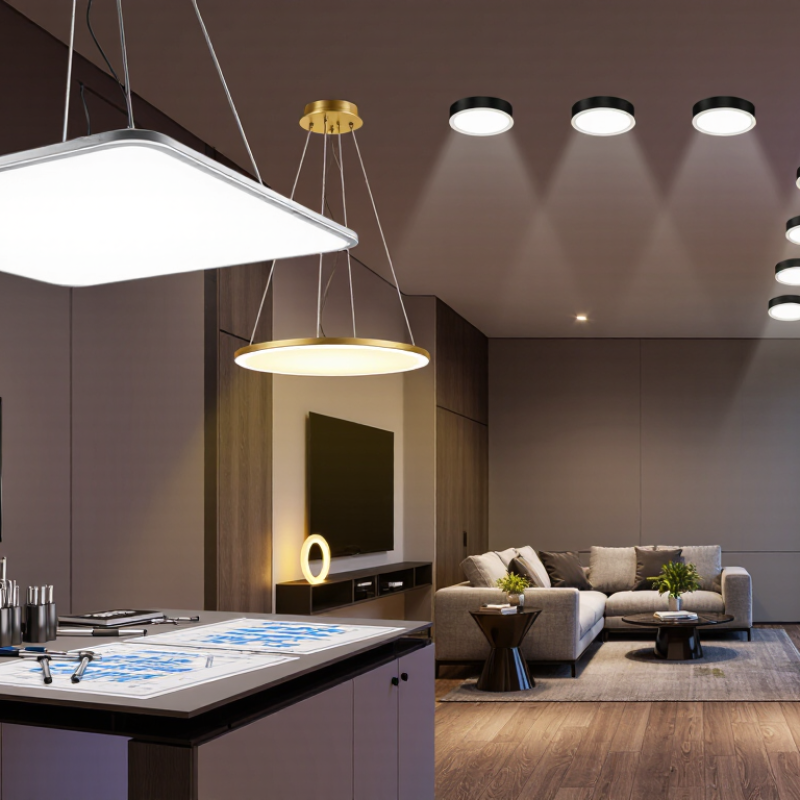
Modern LED lighting comes in several forms, and each suits a different space. Replacement bulbs fit familiar sockets and make upgrades simple. They work well in table lamps and ceiling fixtures, but brightness and color quality vary. Check lumens for light output, not watts. Small details matter.
Integrated LED fixtures build the light source into the fitting. They can be slim and efficient, such as a flat kitchen panel or a narrow hallway downlight. However, if the light engine fails, replacing the whole fixture may be necessary. LED strips add flexible, indirect light under shelves or along stair edges. Their adhesive backing needs a clean, dry surface. Placement matters.
LED tubes and panels suit offices, workshops, and other broad work areas. Compare glare control, color rendering, and compatibility with existing drivers. Tunable-white and smart LEDs let users adjust color temperature or schedules. Useful, but not automatically better. I would still test a sample in the actual room; a warm bulb can look harsh against cool-painted walls. Check dimmer compatibility too, since flicker may appear at low settings.
Choosing newer LED technology starts with the room, not the product label. Note what the light must do: illuminate a kitchen worktop, soften a bedroom, or reveal detail in a workshop. Measure the space and mark existing fixtures, switches, and ceiling height. A bright sample in a shop can feel harsh in a small room.
Check installation conditions before comparing features. Damp locations need suitably rated fixtures, while enclosed housings can trap heat and shorten LED life. Confirm that the driver works with your dimmer; otherwise, flicker or limited dimming may appear. Look at color temperature and color-rendering information, too. A warm tone may suit a reading corner, while a cooler tone can help with close visual tasks. Small differences matter.
For a retrofit, record the fixture size, available clearance, and wiring type, then verify the product’s specifications. If wiring is unfamiliar or the circuit needs changes, ask a qualified electrician. It is tempting to choose the highest lumen figure, but glare and poor beam direction can waste that brightness. Test one fixture in the actual room when possible. Measure twice. I still find that lighting plans can miss a shadow near a cabinet or desk, so leave room to adjust. A careful site check often matters more than the newest feature list.
Comparing LED Performance, Efficiency, and Control Features
The newest LED is not automatically the best fit. Compare measured efficacy, light quality, and expected service life for your actual application. Lumens per watt helps assess efficiency, but it does not show how evenly a room will be lit. Check color rendering and color temperature, too. A high color-rendering score can help products look more natural, while warmer or cooler light may suit different tasks. Look for independent test data, not just attractive claims.
Controls matter in daily use. Confirm that dimming works smoothly across the range you need, without flicker or sudden dropouts. Check compatibility with existing switches, sensors, and control systems before ordering. A small sample can reveal glare on a polished desk or uneven color across a wall. Specifications may look excellent, yet the installed result can disappoint. That gap is worth taking seriously.
Tips: Compare total energy use, warranty terms, and replacement access. Test one fixture in the real space before choosing a full installation. Record the settings and conditions; otherwise, comparisons can get messy.
Choosing LED technology is not just a lumen-per-watt comparison. Check the fixture’s voltage, driver, dimmer type, and control system before ordering. A lamp may fit the socket yet flicker when dimmed. Match color temperature to the room, too: a 2700 K lamp feels warmer than a 4000 K task light. Check the product’s certification and test scope. ENERGY STAR certification can help compare efficiency and performance for eligible lamps; commercial projects may also consult DesignLights Consortium listings. Labels are useful, but they do not guarantee compatibility with every older dimmer.
Long-term cost depends on use, electricity rates, replacement labor, and heat. The U.S. Department of Energy reports that LEDs use at least 75% less energy and can last up to 25 times longer than incandescent bulbs (DOE, “LED Lighting”). Treat those figures as a comparison, not a promise for every installation. A 10-watt LED replacing a 60-watt lamp, used four hours daily, saves about 73 kWh yearly. At $0.15 per kWh, that is roughly $11 annually, before purchase costs. Small savings add up. Yet enclosed fixtures and poor heat management can shorten service life. It is easy to over-trust a label. Before buying in bulk, test one lamp with the actual fixture, controls, and operating schedule.
Choose LED technology by the work it must support, not by the newest feature on a specification sheet. A desk area needs comfortable, even light with controlled glare. A warehouse aisle may need narrow optics that direct light onto shelves and floors. Light is functional.
For retail displays, color rendering matters because fabrics, food, and finishes should look natural under the lamps. In a workshop, reliable color and low flicker can help people inspect details during long shifts. Check the fixture’s lumen output, beam pattern, color temperature, and compatibility with dimmers or sensors. These details shape how the space feels and how much energy the installation uses.
Match the fixture to its environment, too. Dust, moisture, heat, and limited ceiling space can change which design performs reliably. A sealed fitting may suit a damp utility room, while a low-profile panel may work better in a shallow office ceiling. Review maintenance access and replacement costs before deciding. A product that looks efficient on paper may not fit the room’s wiring or controls. That is easy to overlook. If possible, test a sample in the actual space and observe it at different times of day. The first choice may still need adjustment.
Match the light’s color temperature to the application. The ranges below are common starting points, not fixed standards.
Color temperature describes whether light appears warm or cool; it does not measure brightness or energy efficiency. Also consider color rendering, glare, dimming needs, and the fixture’s environment when selecting an LED solution.
Check voltage, driver, dimmer type, and control system. A lamp can fit the socket yet flicker with an older dimmer.
A 2700 K lamp gives a warmer feel. A 4000 K lamp can suit task areas. Test the light in the room.
No. Certification can help compare efficiency and performance, but it does not ensure compatibility with every fixture or dimmer.
A 10-watt LED replacing a 60-watt lamp, used four hours daily, saves about 73 kWh yearly. At $0.15 per kWh, that is roughly $11 before purchase costs. Estimates vary.
Consider lumen output, beam pattern, glare, color rendering, and flicker. A desk needs even light; a warehouse aisle may need a narrower beam.
Dust, moisture, heat, and ceiling space all matter. A sealed fixture may suit a damp utility room. Check access for maintenance, too.
Yes. Enclosed fixtures and poor heat management can shorten service life. A label is not a promise.
Yes. Try one in the actual fixture with its controls and normal schedule. Observe it at different times of day. I might still adjust the choice.
Choosing the latest LED lighting technology begins with understanding the main options, from standard replacement lamps to adjustable, connected, and task-specific lighting. Start by defining the purpose of each space, the desired brightness and color appearance, and the installation conditions, including fixture type, available controls, and indoor or outdoor exposure. Asking what are the latest trends in led lighting technology can help frame your research, but the right choice depends on how well a solution serves your actual needs.
Compare energy efficiency, light quality, expected lifespan, dimming and control features, and compatibility with existing equipment. Check relevant safety and performance certifications, installation requirements, and long-term costs rather than focusing only on the initial purchase price. By weighing these factors together, you can match an LED technology to its application—whether for general illumination, focused work, accent lighting, or a space that benefits from flexible control—and make a practical, informed decision.
Lume Light