In 2026, LED lighting is no longer just a way to replace older bulbs. For many organizations, it is part of a wider effort to manage energy use, improve visibility, and control maintenance costs. But which sectors gain the most? The question “what industries benefit from led lighting systems” depends on how each space is used, how long lights stay on, and what its occupants need to see.
Warehouses and manufacturing plants often need bright, consistent light across large work areas and high ceilings. Retailers use lighting to make products easier to see, while offices and schools may prioritize comfortable, even illumination. In hospitals and clinics, dependable lighting supports staff tasks; in agriculture, carefully selected fixtures can support indoor growing environments. Details matter. A poorly planned retrofit can create glare, uneven coverage, or unnecessary expense, even when the fixtures are efficient.
This overview explores the top industries adopting LED systems in 2026 and the practical reasons behind those choices. It considers factors such as operating hours, fixture placement, color quality, controls, and maintenance access. Results vary by building, climate, electricity rates, and existing equipment, so broad claims deserve a closer look. A lighting assessment and verified product specifications offer a stronger basis for decisions than headline savings alone. The technology is useful, not magic. Understanding its limits helps organizations choose upgrades that fit real spaces and real budgets.
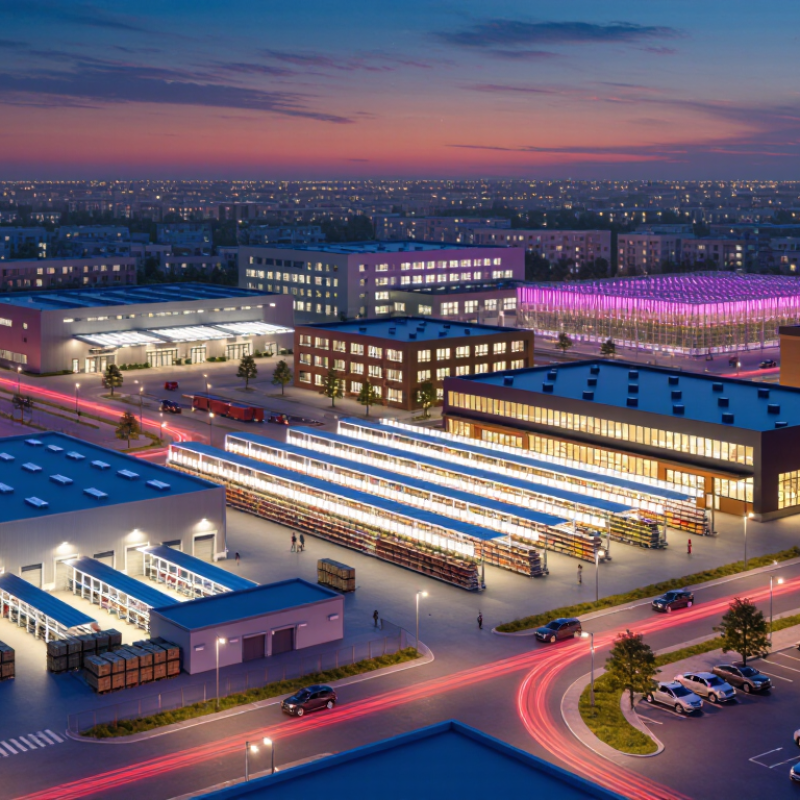
Manufacturing floors and warehouses need light that supports accurate work, safe movement, and steady operations. In 2026, LED high-bay fixtures can provide focused illumination over tall racks and production lines, while reducing wasted light on ceilings. Clear visibility helps workers read labels, inspect surface defects, and spot forklift traffic. At a packing station, for example, poor color rendering can make subtle product differences harder to see. Fixture placement matters as much as fixture output; bright patches and deep shadows can still cause problems.
Tips: Measure light at work surfaces and aisles before choosing fixtures. Check glare from polished floors, metal equipment, and screens. Use occupancy or daylight controls where activity and window light vary. Keep a simple maintenance log.
A good retrofit starts with the actual work, not a sales estimate. Compare existing energy use, operating hours, and maintenance needs with the proposed design. LED systems often reduce relamping and power demand, but savings vary with the building and controls. Replacing every fixture at once may not be the best choice. That is easy to overlook. A small trial area can reveal whether beam angles, color temperature, and dimming suit the shift patterns before crews commit to a wider installation.
Healthcare and laboratory spaces depend on lighting that stays consistent through long shifts. In an examination room, staff need to see skin tone, labels, and instrument markings clearly. In a lab, even a small shadow can make a pipette scale harder to read. LED systems can provide steady, targeted illumination while using less energy than many older lighting options. The result depends on the fixture and its placement.
Small details matter. Choose lighting with suitable color rendering and controlled glare, especially around monitors and glossy work surfaces. Laboratories may also need sealed fixtures that are easier to clean, while patient rooms benefit from dimming options for rest and examinations. These needs are not identical. A single lighting layout rarely suits every room.
Reliable performance takes more than selecting LEDs. Facilities teams should check for flicker, uneven brightness, and color shifts after installation. They should also review maintenance records and confirm that backup lighting covers critical areas. LED fixtures can reduce relamping work, but they still need inspection. A room that looks bright may not be comfortable or useful for detailed tasks. That distinction is easy to miss, and worth checking with the people who work there every day.
In retail, LED lighting can make fabric colors, fresh produce, and product displays easier to assess. Adjustable scenes also let stores brighten window displays while keeping quieter areas comfortable. The U.S. Energy Information Administration’s 2018 Commercial Buildings Energy Consumption Survey puts lighting at about 17% of commercial-building electricity use. Better controls can therefore support both merchandising and operating costs.
Hospitality spaces need a different balance. Warm, even light can make a hotel lobby feel welcoming, while brighter task lighting helps guests read menus and room details. LEDs also offer dimming and color-temperature control, useful across breakfast service, afternoon check-ins, and evening dining. The U.S. Department of Energy says LEDs use at least 75% less energy than incandescent lighting. Still, a poorly aimed fixture can create glare on polished counters or screens. More light is not always better; that trade-off deserves attention.
Tips: Test fixtures in the actual space before a full rollout. Check skin tones, food colors, and glare at different times of day. Pair dimmers with occupancy sensors in back rooms, but verify that settings do not leave guests or staff working in dim conditions.
| Industry / Setting | Common Lighting Need | LED Application | Customer Experience Impact | Operational Benefit | Useful Performance Measures |
|---|---|---|---|---|---|
| Retail stores | Flexible lighting for merchandise, aisles, displays, and changing promotions. | Layered ambient, accent, and display lighting; dimming and scene controls where appropriate. | Consistent color rendering and focused display lighting can make product details easier to see and help create a clear visual hierarchy. | LEDs can reduce lighting electricity use and relamping frequency compared with older lighting systems; controls can reduce use when full output is unnecessary. | Lighting energy use (kWh); energy use per floor area; display illuminance (lux); color-rendering requirements; lamp and driver replacement hours. |
| Hotels and resorts | Different lighting scenes for guest rooms, lobbies, corridors, dining areas, and outdoor spaces. | Dimmable room lighting, occupancy-based controls in suitable areas, and coordinated task and ambient lighting. | Comfortable, adjustable light can support activities such as reading, relaxing, dining, and navigating shared spaces. | Longer service life can reduce maintenance visits in guest rooms and hard-to-reach areas. Automated controls can limit lighting in unoccupied spaces. | Lighting energy per occupied room; guest-room maintenance calls; replacement labor hours; control-system operating hours; guest comfort feedback. |
| Restaurants and cafés | Balance between functional visibility, food presentation, and a welcoming dining atmosphere. | Dimmable ambient lighting paired with task lighting for service stations, kitchens, and dining tables. | Adjustable scenes can support different service periods, while appropriate color quality helps food and interior finishes appear natural. | LEDs produce less heat at the light source than many older lamp types, which may reduce added cooling load; actual HVAC effects depend on the building and equipment. | Lighting kWh; dining-area illuminance (lux); dimming schedule; maintenance hours; cooling-energy trend where separately measured. |
| Grocery and food retail | Reliable, even illumination across aisles, checkout areas, and refrigerated displays. | Efficient general lighting with application-appropriate color quality and controls for back-of-house or intermittently used areas. | Even lighting supports product visibility and helps customers navigate aisles and service areas. | Lower lighting electricity demand may also reduce heat released into conditioned spaces. Refrigeration and HVAC impacts vary with fixture design and store conditions. | Lighting energy per floor area; aisle and display illuminance (lux); fixture failures; maintenance labor; temperature and energy trends in relevant zones. |
| Conference and event venues | Rapid transitions between presentations, meetings, banquets, and events. | Controllable lighting zones and preset scenes, with task lighting for setup and service areas. | Scene changes can adapt the space for presentations, dining, or circulation without relying on a single fixed lighting level. | Scheduling and zoning can avoid operating all fixtures at full output when a room is partly occupied or configured for a different use. | Energy use per event or operating hour; occupied-zone lighting hours; scene usage; setup and maintenance labor; control-system availability. |
| Retail and hospitality back-of-house | Dependable lighting for storage, staff corridors, laundry areas, offices, and loading zones. | LED general lighting with occupancy or scheduling controls where suitable for the space and safety requirements. | Consistent visibility can support staff navigation and routine tasks. | Reduced relamping needs can help limit maintenance disruption, especially in areas with difficult access or long operating hours. | Lighting kWh; hours of operation; lamp and driver failures; maintenance labor; illuminance at work surfaces (lux). |
Planning note: Results depend on the existing lighting, operating hours, controls, installation quality, and energy rates. The U.S. Department of Energy reports that LEDs use at least 75% less energy and last up to 25 times longer than incandescent lighting; those figures should not be treated as a guaranteed comparison with commercial fluorescent or HID systems.
In 2026, LED lighting helps growers control more than operating costs. It lets them adjust light intensity, spectrum, and timing to match a crop’s growth stage. In greenhouses, that can mean adding light on a dull winter morning without overheating leaves. In indoor farms, even coverage can reduce uneven growth across a shelf. Small changes matter. Nelson and Bugbee’s 2014 PLOS ONE comparison measured photon efficacy of 1.66 micromoles per joule for tested LEDs, versus 1.02 for high-pressure sodium fixtures. That suggests about 38% less electricity for the same photon output in that comparison. It is a historical benchmark, not a promise for every modern installation.
Food producers should monitor photosynthetic photon flux density at canopy level, not rely on fixture wattage alone. Too much light can waste power or stress plants; too little can slow growth and affect consistency. Spectrum also needs testing against the crop and cultivar. A trial row, leaf-temperature checks, and harvest-weight records are more useful than guessing. Lighting cannot fix every quality issue. FAO estimated that 13.2% of food was lost between harvest and retail in 2021, but those losses have many causes. Well-managed lighting can support reliable production; it is only one part of preserving quality.
On a wet commuter road, clear lighting helps drivers read lane markings, spot cyclists, and judge curves sooner. LED luminaires can direct light onto the roadway while limiting spill toward nearby homes. That matters at crossings. At stations, even illumination can make platform edges, stairs, and signs easier to see. Uniformity matters more than raw brightness.
Public agencies also value longer service intervals. Fixtures over busy roads or high platforms can be difficult and disruptive to reach. Fewer replacements may reduce lane closures, lift use, and maintenance exposure. Well-sealed housings can help resist rain, dust, and vibration. Not magic, though. Heat, moisture, and power surges can still shorten component life, so enclosure ratings and surge protection deserve careful review. Maintenance logs are more useful than optimistic service-life estimates.
Before upgrading a tunnel, bridge, bus depot, or rail corridor, engineers should check lighting levels, glare, color rendering, and emergency backup. Controls can dim lights during quiet hours, but abrupt changes may affect visual adaptation and perceived safety. Test at night. Measure light on the actual pavement or platform, then ask operators and passengers what still feels unsafe. LEDs can improve visibility, yet poor placement may create dark patches or glare. Some sites will need more than new fixtures.
Staff need to see skin tones, labels, and instrument markings clearly. Small shadows can obscure a pipette scale. A bright room may still be uncomfortable.
Check color rendering, glare, and brightness around monitors and glossy surfaces. Sealed fixtures can be easier to clean. Needs differ by room.
Dimming can support rest and examinations. Check that lighting remains useful for staff tasks. Comfort matters too.
Measure light at canopy level, rather than relying on fixture wattage. Test a row and track leaf temperature and harvest weight. Guessing is weaker.
No. Adjust intensity, spectrum, and timing to the crop and growth stage. Too much light can stress plants; too little may slow growth.
One historical comparison measured 1.66 micromoles per joule for tested LEDs, versus 1.02 for older fixtures. Results vary by installation. Check your own setup.
Uniform light can help people see lane markings, stairs, and platform edges. Raw brightness is not enough. Dark patches still matter.
Measure light on the actual pavement or platform, and check glare and emergency backup. Test at night. Ask operators and passengers what still feels unsafe.
No. Sealed housings may resist rain and dust, but heat, moisture, and surges can shorten component life. Review inspection records, not just service-life estimates.
In 2026, LED lighting systems are helping a wide range of industries improve visibility, efficiency, and everyday operations. In manufacturing plants and warehouses, they provide consistent illumination for detailed tasks and safer movement while helping reduce energy use. Healthcare facilities and laboratories benefit from dependable lighting that supports careful work and clean, well-lit environments. Retail and hospitality businesses can use thoughtfully planned lighting to make spaces more welcoming and to support staff and customers throughout the day.
Other important areas include agriculture and food production, where adjustable lighting can help manage growing conditions and maintain product quality. Transportation networks and public infrastructure also benefit from durable, efficient lighting that improves visibility for workers and the public while supporting longer service life. Together, these examples show what industries benefit from led lighting systems: sectors that need reliable illumination, practical energy savings, and lighting suited to specific tasks and spaces.

Lume Light