How to Reduce Maintenance Costs with LED Lighting?

Time:2026-11-12 Author:Ethan
0%

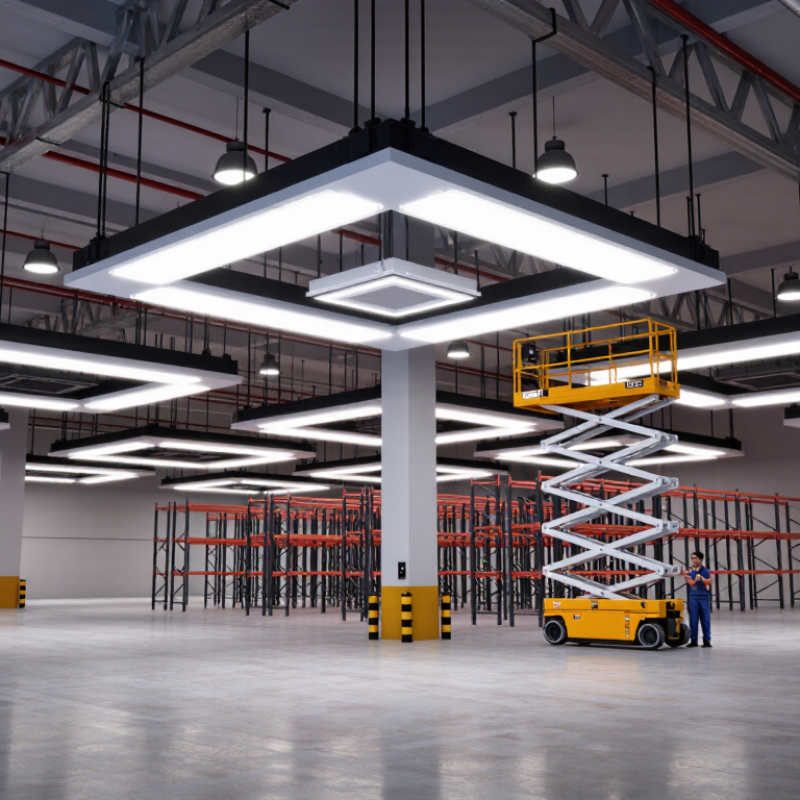
LEDs can reduce maintenance, but the savings depend on more than the lamp. Fixture quality, operating hours, heat, dust, and access all shape how often a team must respond. A warehouse ceiling filled with hard-to-reach fittings makes every replacement a costly task. A clean, well-designed LED installation can mean fewer ladder visits, fewer replacement parts, and less disruption.

Lighting researcher Dr. Michael Siminovitch has helped advance practical, energy-efficient lighting design. A concise paraphrase of the relevant principle is: match the lighting system to the space and its real use. This is a paraphrase, not a verified direct quotation. That distinction matters; good maintenance planning should rest on evidence, not invented claims. The same care applies to projected savings. Check fixture warranties, driver specifications, expected operating hours, and the cost of labor before comparing options. Small details matter.

This guide explains how to reduce maintenance costs with led lighting by focusing on decisions that affect upkeep over time. It will cover fixture selection, installation conditions, cleaning schedules, and simple inspection routines. It will also consider where LED upgrades may not deliver the expected return. A longer rated life does not mean zero maintenance. Dust still gathers. Connections can loosen. Controls may need adjustment. The useful question is not merely how long an LED lasts, but how reliably the whole system performs in your building. Start there. Then compare lifecycle costs with care.
How to Reduce Maintenance Costs with LED Lighting?

Assess Relamping Labor and Access Costs in the Existing Lighting System

Before comparing LED options, record how often each lamp type fails and how long each replacement takes. Include travel, diagnosis, ladder or lift setup, and cleanup—not just the minutes spent changing a lamp. A fixture above a clear office aisle may take minutes; one over a stairwell or production line can require access equipment and a work-area shutdown. That adds up.

Tips: Review maintenance tickets from the past year. Note fixture locations, labor hours, lift rentals, and repeat failures. Ask technicians which areas are hardest to reach. Estimates can be imperfect, especially when records are incomplete.

Access matters. Compare annual relamping costs by location, not only across the whole building. If a high-bay fixture requires a lift and two workers, fewer replacements may bring meaningful savings. But check whether the proposed LED fixture fits the existing housing and suits the environment. A longer rated life does not remove cleaning, inspection, or driver-replacement needs. Use observed maintenance data alongside supplier life estimates, and revisit the calculation after installation. That keeps the savings estimate grounded in actual site conditions.

Compare LED Lifetime with Incandescent Lamps: Up to 25× Longer (U.S. DOE)

Maintenance costs are not limited to the price of a replacement lamp. They can include staff time, access equipment, and interruptions in rooms or work areas. The U.S. Department of Energy says LED bulbs can last up to 25 times longer than incandescent lamps. That is an upper comparison, not a promise for every installation. Actual life depends on the product, operating conditions, and how often lights are switched on and off.

Fewer ladder trips.

Fewer replacements matter most where access is awkward: a high ceiling, a stairwell, or a fixture above a busy counter. Imagine a maintenance worker carrying a ladder across a room each time a lamp fails. For a fair estimate, compare expected lamp life and purchase price, then include the labor and access costs of replacement. Check rated life and warranty details, and consider heat, ventilation, and dimmer compatibility before choosing an LED. A longer rating can reduce routine work, but poor fixture compatibility may create problems instead. The 25× figure is useful context; it is not a maintenance budget by itself.

Select LEDs Using L70 Life Ratings and Verified Product Warranties

LED maintenance costs often come from repeated lift rentals, labor, and room closures—not just replacement lamps. The U.S. Department of Energy’s 2011 report, LED Luminaire Lifetime: Recommendations for Testing and Reporting, describes lumen maintenance as a key measure of LED life. L70 is the estimated operating time before light output drops to 70% of its initial level. That is not a failure date. Ask suppliers for LM-80 test results and a TM-21 projection; the former measures LED package lumen maintenance, while the latter estimates long-term performance. Check that the data matches the actual LED component, not a similar product.

Then read the warranty carefully. A long coverage period may exclude labor, access equipment, or failures caused by high operating temperatures. Get those terms in writing. For a warehouse with fixtures mounted 25 feet high, a slightly higher purchase price may be worthwhile if documented life and coverage reduce service visits. Still, L70 can sound more reassuring than it is. It does not promise uniform brightness, and individual fixtures may fail earlier. Compare the warranty’s remedy, claim process, and required operating conditions against your site’s actual hours and temperatures. Keep a few spare units; even sound specifications cannot prevent every surprise.

How to Reduce Maintenance Costs with LED Lighting? - Select LEDs Using L70 Life Ratings and Verified Product Warranties

Planning example: service-life conversions below assume 4,000 operating hours per year. Actual life, warranty coverage, and maintenance savings depend on the product, installation, environment, and operating schedule.

Data dimension Planning value or check How to use it for maintenance planning
L70 life ratings and operating hours
Meaning of L70 Hours until light output is projected to reach 70% of its initial level. L70 describes lumen maintenance; it does not necessarily mean the fixture will stop working at that point.
Example L70 rating: 50,000 hours 50,000 ÷ 4,000 = 12.5 years Use the conversion as an estimate for a site operating 4,000 hours annually.
Example L70 rating: 60,000 hours 60,000 ÷ 4,000 = 15 years Compare products using the same operating-hours assumption and documented rating method.
Example L70 rating: 70,000 hours 70,000 ÷ 4,000 = 17.5 years A higher rating may support longer maintenance intervals, but confirm that the rating applies to the complete luminaire and intended operating conditions.
Annual operating hours Actual scheduled hours per year Calculate from the site schedule. For example, 10 hours per day × 400 days is not a valid annual schedule; use the actual number of operating days in the year.
Warranty verification and cost control
Written product warranty Record the stated term, start date, covered components, and remedy. Verify the terms for the exact product and purchase. Do not treat a warranty term as a guaranteed service life or as proof of L70 performance.
Warranty exclusions Check exclusions for installation, operating temperature, controls, surge events, and use outside the specified conditions. Confirm that the installation and operating environment meet the warranty requirements before setting a maintenance plan.
Maintenance-cost estimate Annual maintenance cost = expected replacements × (part cost + labor cost + access/equipment cost). Use local labor rates, actual access requirements, and documented replacement assumptions; compare LED options using the same inputs.
Records to retain Product data sheet, L70 documentation, warranty document, invoice, installation date, and service log. Keeping these records makes it easier to verify claims, track failures, and assess maintenance costs over time.

Estimate Energy Savings Against the U.S. DOE Benchmark of 75% Lower Use

To estimate energy savings, compare the existing lamp’s wattage with the proposed LED’s wattage. The U.S. Department of Energy’s benchmark is about 75% lower energy use than incandescent lighting. Treat it as a reference, not a guaranteed result for every retrofit. For example, 100 lamps running 10 hours daily use 21,900 kilowatt-hours yearly at 60 watts each. Replacing them with 15-watt LEDs would use about 5,475 kilowatt-hours, a 75% reduction. That is a benchmark. Actual savings depend on operating hours, fixture compatibility, and controls.

Lower energy use can also mean fewer lamp replacements and less maintenance labor. Estimate this separately: record how often lamps fail, the cost of each replacement, and the time staff spend accessing fixtures. High ceilings make each failed lamp more expensive to service. Real results vary. If the existing system uses fluorescent or other non-incandescent lamps, compare its actual wattage and energy bills rather than assuming the DOE benchmark applies. Old equipment labels are sometimes missing, so the estimate may be imperfect; note assumptions and check them against utility bills after installation.

How to Reduce Maintenance Costs with LED Lighting?

Estimate energy savings against the U.S. DOE benchmark of 75% lower use.

Illustrative estimate: For 100 lamps used 10 hours per day, replacing 60 W incandescent lamps with 15 W LED lamps reduces modeled annual electricity use from 21,900 kWh to 5,475 kWh—a 75% reduction, matching the U.S. Department of Energy’s benchmark for LEDs versus incandescent lighting. Longer-lasting LEDs can also mean fewer lamp replacements and less maintenance labor. Actual savings depend on lamp wattage, operating hours, and local conditions.

Track Lamp Failures, Service Calls, and Maintenance Costs After Installation

After installation, track failures, service calls, and maintenance costs by fixture location and month. Record the fixture type, installation date, operating hours, fault, labor time, replacement parts, and access equipment used. A failed driver in a high-bay fitting may cost more to replace than the part itself, especially when a lift is required. Count the friction.

Use service calls per 1,000 fixture-years and labor hours per 1,000 operating hours to compare areas fairly. Separate true failures from cleaning, damage, and control-setting changes; otherwise, the data can exaggerate reliability problems. The U.S. Department of Energy notes that LEDs can last up to 25 times longer than incandescent lighting. That is useful context, not a promise that every LED fixture will avoid service.

Review the log quarterly and compare it with the same area’s pre-installation records. Include contractor invoices and downtime, not just lamp costs. If calls fall but labor costs rise, access or driver replacement may be the real issue. Be honest about gaps: older work orders may not identify the exact fixture, and early results can be noisy. Keep those records marked as incomplete rather than treating them as clean evidence.

FAQS

How much longer can LED bulbs last than incandescent lamps?

LEDs can last up to 25 times longer, but that is an upper comparison, not a guarantee. Actual life depends on the product, operating conditions, and switching frequency.

Why do longer-lasting lamps matter in hard-to-reach places?

Fewer replacements can mean fewer ladder trips in stairwells or near high ceilings. Fewer ladder trips. Staff time and access equipment still have costs.

What costs should I compare when choosing replacement lamps?

Compare purchase price and rated life, then add labor, access equipment, and work interruptions. A lamp above a busy counter may take longer to replace than one in an open room.

What should I check before installing LED lamps?

Check rated life, warranty details, heat, ventilation, and dimmer compatibility. A longer rating helps only if the lamp suits the fixture.

What details should maintenance staff record after installation?

Record fixture location, fixture type, installation date, operating hours, reported fault, labor time, replacement parts, and access equipment. A lift used for a high-bay fitting is worth noting.

How can service costs be compared fairly across areas?

Track service calls per 1,000 fixture-years and labor hours per 1,000 operating hours. Separate failures from cleaning, damage, and control-setting changes.

How often should maintenance records be reviewed?

Review them quarterly against records from the same area before installation. Include contractor invoices and downtime, not just lamp costs.

What can make the results difficult to interpret?

Fewer service calls do not always mean lower costs; driver replacement or difficult access may still be expensive. Older work orders may lack fixture details, so mark incomplete records clearly. The data may be messy.

Conclusion

To understand how to reduce maintenance costs with led lighting, start by reviewing the existing system. Count how often lamps need relamping, estimate the labor involved, and note any access challenges, such as high ceilings or hard-to-reach fixtures. These factors can make routine lamp replacement a significant expense. Compare the replacement cycle with LED options: according to the U.S. Department of Energy, LEDs can last up to 25 times longer than incandescent lamps, potentially reducing the frequency of service visits.

When choosing LEDs, check the L70 life rating, which indicates how long a lamp is expected to operate before its light output declines to 70% of its initial level. Review verified product warranties and estimate energy savings against the DOE benchmark of up to 75% lower energy use. After installation, track lamp failures, service calls, labor hours, and maintenance costs. Comparing these records with your previous lighting data will help show whether the upgrade is delivering lasting savings and where further improvements may be useful.

Ethan

Ethan

Ethan is a seasoned marketing professional with a deep expertise in our company's innovative product line. With a passion for sharing knowledge and insights, he takes the lead in regularly updating our corporate blog, where he explores industry trends, product features, and effective marketing......