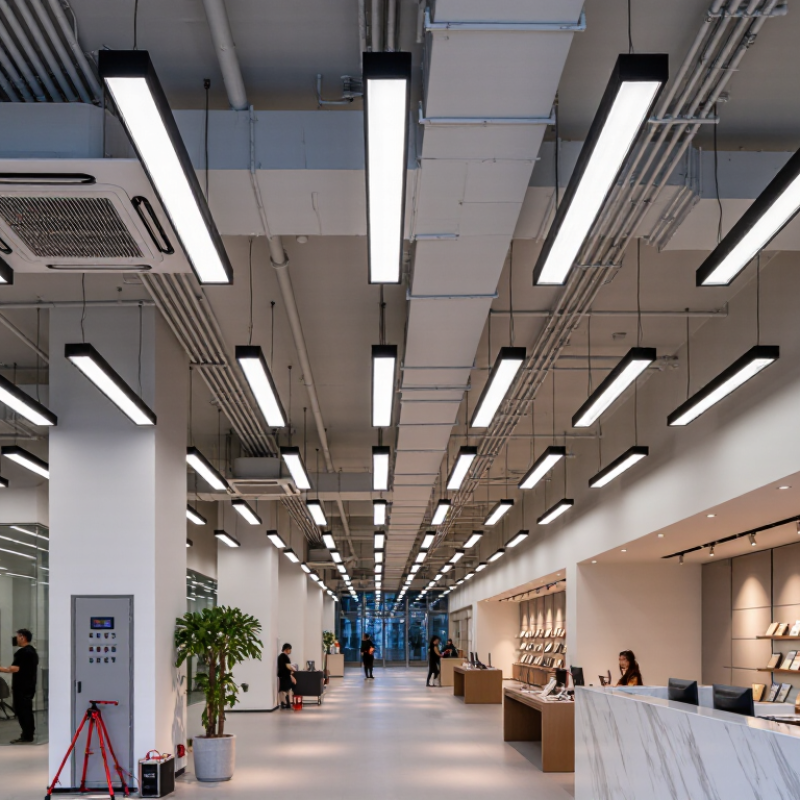
How to Select China Top LED Lights for Commercial Spaces

Time:2026-10-10 Author:Oliver
0%

Selecting China’s top LED lights for commercial spaces requires more than comparing wattage and wholesale prices. It demands field experience, technical judgment, and careful supplier verification. This guide explains how to select led lights for commercial spaces using measurable performance, practical installation needs, and long-term operating costs.

Randall Whitehead, a respected lighting designer and educator, describes lighting as “the jewelry of architecture.” His observation matters in offices, retail stores, hotels, and restaurants. A fitting should improve visibility without producing harsh glare. Review efficacy, color rendering, color temperature, beam angle, flicker performance, and driver quality. For retail displays, high CRI can protect product colors. For offices, comfortable glare control may matter more than maximum brightness. Check photometric reports, laboratory testing, warranty terms, and replacement support before approving samples.

China offers extensive LED manufacturing capability, but quality varies between suppliers. Inspect thermal design, housing materials, surge protection, and control compatibility. Ask for independent test documents, not only attractive catalog claims. Visit a production line when possible. Watch how workers seal connectors and test finished fixtures. Small details can become expensive failures above a busy checkout counter.

No checklist is perfect. A technically efficient lamp may still feel uncomfortable in a real room. A beautiful sample may perform poorly after months of heat exposure. Test products in the actual space, measure light levels, and collect feedback from employees or customers. That feedback is sometimes inconvenient. It is also valuable. The strongest decision balances visual comfort, energy performance, maintenance access, supplier credibility, and the building’s changing needs.

How to Select China Top LED Lights for Commercial Spaces

Define Commercial Lighting Requirements and Performance Goals

Selecting China’s top LED lights for commercial spaces starts with clear performance goals, not attractive product photos. Define the task performed in each area: reading, retail display, cooking, circulation, or detailed assembly. A reception desk may need comfortable, even illumination, while a showroom requires stronger vertical light on products. Record target illuminance in lux, color temperature, color rendering, glare control, and operating hours. These details make supplier comparisons more reliable.

Efficiency matters, but it should not stand alone. Check lumens per watt, driver quality, dimming compatibility, heat management, and expected maintenance access. For offices, low glare can reduce screen discomfort. For retail areas, a high CRI can protect product colors from looking dull. Review photometric files, test samples on site, and request safety and performance documentation. A common mistake is choosing the highest output. Too much brightness can create glare, shadows, and unnecessary energy use. The plan may need revision after a real evening test.

Tips: Build a room-by-room lighting schedule before requesting quotations. Specify beam angle, mounting height, IP rating, control method, and acceptable color variation. Compare measured results, not only catalog claims. Leave a small budget for mock-ups; one sample can reveal reflections that drawings miss. Also question overly perfect projections. Dust, aging, and cleaning habits will affect actual performance. Good planning admits these variables instead of hiding them.

How to Select China Top LED Lights for Commercial Spaces - Define Commercial Lighting Requirements and Performance Goals

Commercial Space Primary Lighting Requirement Recommended Performance Goal Key LED Specifications Selection Guidance for Commercial Projects
Open-Plan Office Comfortable, uniform task lighting with low glare for computer-based work. Maintained illuminance: 300–500 lux
Uniformity: at least 0.60 where applicable
CCT: 3500–4000 K
CRI: ≥80
UGR: ≤19 for screen-based work
Target efficacy: ≥120 lm/W
Choose recessed or suspended fixtures with controlled optical distribution, low flicker, and a matte or micro-prismatic diffuser. Confirm glare performance using photometric data rather than relying only on fixture appearance.
Retail Store Bright, visually attractive lighting that supports product presentation and customer navigation. Ambient illuminance: 500–1000 lux
Accent lighting: commonly 2–3 times the ambient level
CCT: 3000–4000 K
CRI: ≥90 for merchandise display
Target efficacy: ≥110 lm/W
Beam angles: approximately 15°–60° for accent lighting
Use a layered design with general, accent, and feature lighting. Select high-CRI LED modules with consistent color bins and interchangeable lenses when displays may change frequently.
Warehouse and Logistics Area Efficient lighting for aisles, picking, storage, and safe vehicle or pedestrian movement. Maintained illuminance: 150–300 lux
Higher levels may be required for detailed picking or inspection tasks.
CCT: 4000–5000 K
CRI: ≥80
Target efficacy: ≥140 lm/W
Recommended control: occupancy or aisle sensing
Select high-bay fixtures with optics matched to mounting height and aisle geometry. Verify thermal management, surge protection, emergency-lighting compatibility, and resistance to dust or moisture where conditions require it.
Hotel Lobby and Reception Welcoming, comfortable illumination with visual emphasis on reception desks and architectural features. General illuminance: 100–300 lux
Reception or check-in areas: approximately 300–500 lux
CCT: 2700–3500 K
CRI: ≥90 for premium finishes
Low flicker: preferred
Dimming: 10–100% where practical
Combine ambient fixtures with decorative or accent luminaires. Specify smooth dimming, stable color quality at different output levels, and warm white light suitable for hospitality interiors.
Restaurant and Café Atmospheric lighting for dining areas combined with brighter, practical illumination in service zones. Dining area: 100–200 lux
Service and circulation areas: 200–300 lux
CCT: 2700–3000 K
CRI: ≥90
Target efficacy: ≥100 lm/W
Dimming and scene control: recommended
Use warm, high-CRI products to improve food and material appearance. Specify suitable IP ratings near kitchens or wash-down areas, and keep drivers accessible for maintenance.
Classroom and Training Room Uniform lighting for reading, writing, presentations, and face-to-face communication. Maintained illuminance: 300–500 lux
Uniformity: at least 0.60 where applicable
CCT: 3500–4000 K
CRI: ≥80
UGR: ≤19–22 depending on layout
Flicker: low and suitable for camera use
Select glare-controlled fixtures with separate switching or dimming zones. Consider daylight sensors, presence detection, and compatibility with display screens or video conferencing equipment.
Healthcare Waiting Area Clear, comfortable illumination that supports orientation, reading, and a calm environment. General illuminance: 200–300 lux
Reception and reading points: 300–500 lux
CCT: 3000–4000 K
CRI: ≥80; ≥90 for sensitive visual tasks
UGR: preferably ≤19–22
Prioritize low glare, easy-to-clean surfaces, reliable color consistency, and quiet drivers. Follow the applicable healthcare electrical, infection-control, and emergency-lighting requirements for the project location.
Parking Garage Continuous, uniform illumination for vehicles, pedestrians, entrances, ramps, and security cameras. Typical maintained illuminance: 50–100 lux
Higher levels may be required at entrances, ramps, or pedestrian routes.
CCT: 4000–5000 K
CRI: ≥70–80
IP rating: typically IP65 or higher for exposed areas
Surge protection: recommended
Use durable, sealed fixtures with wide distributions and strong thermal design. Consider occupancy or daylight controls, but maintain minimum safety levels and avoid abrupt changes in brightness.
Manufacturing and Assembly Area Task-appropriate illumination for assembly, inspection, machinery operation, and worker safety. General work: 300–500 lux
Detailed assembly or inspection: 500–1000 lux
CCT: 4000–5000 K
CRI: ≥80; ≥90 for color inspection
Target efficacy: ≥130 lm/W
Low flicker: essential near rotating machinery
Match beam angle, mounting height, and uniformity to the production layout. Check compatibility with machine vision, reflective surfaces, hazardous-area classifications, and local occupational lighting rules.
Outdoor Commercial Walkway Safe pedestrian movement, clear wayfinding, and controlled light spill during nighttime operation. Typical maintained illuminance: 10–30 lux
Higher levels may apply at entrances, stairs, or loading points.
CCT: 3000–4000 K
CRI: ≥70–80
IP rating: IP65 or higher
Impact rating: select according to exposure
Specify weather-resistant fixtures with appropriate glare shielding, corrosion protection, and optical control. Review local requirements for light trespass, sky glow, emergency routes, and accessibility.
Commercial Kitchen Bright, shadow-reduced lighting for food preparation, cleaning, storage, and safe movement. Preparation areas: 500 lux or project-specific requirement
Circulation and storage: commonly 200–300 lux
CCT: 4000–5000 K
CRI: ≥80
IP rating: commonly IP65 or higher in wet zones
Sealed, cleanable housing
Use smooth, sealed luminaires that resist grease, moisture, and frequent cleaning. Confirm the fixture's temperature rating, mounting method, food-area suitability, and compatibility with local hygiene regulations.
Corridor and Stairway Continuous, even illumination for orientation, circulation, and safe changes in level. Typical maintained illuminance: 100–200 lux
Stairs and hazard points may require higher levels.
CCT: 3000–4000 K
CRI: ≥80
Uniformity: minimize dark zones
Controls: occupancy sensing where appropriate
Avoid excessive contrast and direct glare. Use continuous switching logic or dim-to-low controls, while ensuring emergency lighting remains independent and compliant with applicable codes.
Specification note: Illuminance values are planning ranges commonly used for commercial lighting design. Final requirements should be verified against the applicable local code, the task being performed, room geometry, mounting height, daylight contribution, maintenance factor, and the project's lighting calculations.

Compare LED Types, Specifications, and Application Compatibility

How to Select China Top LED Lights for Commercial Spaces

Compare LED Types, Specifications, and Application Compatibility

Choosing commercial LED lights requires more than comparing prices or lumen numbers. In project reviews, I have found that application fit often matters more than maximum output. Flat panels suit offices with regular ceilings and broad, soft illumination. Linear fixtures work well above long counters or open workstations. High-bay lights serve warehouses with tall ceilings, while adjustable downlights support focused retail displays.

Check the specifications carefully. Lumens show total light output, but efficacy indicates energy performance. A useful target is strong efficacy with stable output after extended operation. For offices, choose a comfortable color temperature, suitable CRI, and low glare. Retail spaces may need higher CRI and narrower beam angles. Warehouses require suitable mounting height, beam distribution, surge protection, and dependable thermal management. Do not ignore flicker performance.

Compatibility can prevent expensive mistakes. Confirm ceiling dimensions, voltage, control systems, emergency functions, and installation access before ordering. An IP rating matters in humid areas, but it does not replace proper ventilation. Review photometric files when possible. They reveal whether light reaches shelves, desks, or aisles evenly.

A higher lumen figure is not always better. It can create glare, wasted energy, and uncomfortable reflections on screens. I once underestimated ceiling color and had to reconsider the layout. That experience still matters. Request samples, test them in the actual space, and inspect light quality at different times. Product documents help, but real conditions can be less predictable.

Evaluate Chinese Manufacturers, Certifications, and Product Quality

How to Select China Top LED Lights for Commercial Spaces

Evaluating a Chinese LED manufacturer requires more than comparing prices and product photos. Visit the factory when possible, or request a live video inspection. Check production lines, aging-test equipment, driver assembly, and final inspection records. A clean showroom is not enough.

Ask for certificates that match the exact model and electrical configuration. CE, RoHS, CCC, and relevant IEC test reports may support commercial procurement, but certificates should come from recognized laboratories. Verify report numbers, dates, test standards, and the applicant’s legal company name. Ask for proof.

Product quality appears in small details. Examine solder joints, cable insulation, heat sinks, lens clarity, and driver labeling. Request photometric files, power-factor data, surge protection ratings, LM-80 results, and TM-21 projections when applicable. Confirm whether testing covers the complete luminaire, not only the LED component. Look beyond labels.

A dependable supplier should provide production samples, batch records, warranty terms, and a clear process for handling failures. Independent sample testing before shipment can reveal color shifts, flicker, overheating, or lower-than-promised output. One weakness in many evaluations is trusting the first sample too quickly. Real projects expose issues after long operating hours, especially in high-ceiling warehouses or poorly ventilated retail areas. Include installation conditions in the assessment, and compare delivered batches against the approved sample.

How to Select China Top LED Lights for Commercial Spaces

Recommended procurement weighting for evaluating Chinese LED manufacturers, certifications, and product quality. The framework prioritizes documented performance and independent compliance evidence rather than brand reputation.

Give the greatest weight to measurable product quality, including photometric reports, thermal design, lifetime evidence, and consistency between samples and mass production. Verify relevant documents such as ISO 9001, IEC 60598, IEC 62471, CISPR 15, IEC 61547, RoHS test reports, LM-80, and TM-21 where applicable. Certification requirements may vary by destination market and product type.

Assess Energy Efficiency, Installation, Controls, and Maintenance

How to Select China Top LED Lights for Commercial Spaces

When selecting commercial LED lights from China, examine measured performance, not only wattage or appearance. Request photometric files, lumen maintenance data, color rendering results, and driver specifications. A 150-watt fixture may appear efficient, yet poor heat control can reduce its output over time. For retail areas, offices, and warehouses, match beam angle and light level to ceiling height and task requirements. Test a sample in the actual space. Product images can mislead.

Installation details deserve equal attention. Check mounting brackets, cable access, emergency lighting compatibility, and the installer’s experience with the building structure. A high-bay fixture at eight meters needs secure suspension and suitable glare control. Confirm voltage, dimming methods, and protection ratings before ordering. Controls such as occupancy sensors, daylight harvesting, 0–10V, or digital systems can reduce energy use. However, complicated controls often confuse staff. Keep the interface practical. Commission every zone after installation.

Maintenance planning should begin before purchase. Ask how quickly replacement drivers, lenses, and connectors can be supplied. Review warranty conditions, expected operating hours, and the process for handling failures. Dusty workshops may require sealed fixtures, while kitchens need careful cleaning schedules. Record initial lux readings near workstations, then compare them during inspections. This creates useful evidence. The lowest price is tempting, but it may hide access costs, inconsistent batches, or difficult repairs. I have found that a slightly higher-quality driver often matters more than a small increase in initial lumen output. Still, every project should verify that assumption through samples and measured data.

Calculate Total Cost, Warranty Coverage, and Supplier Reliability

Selecting China’s top LED lights for commercial spaces requires more than comparing unit prices. Total cost includes product, freight, customs, installation, controls, maintenance, and replacement labor. I have seen a low-priced fixture become expensive after repeated driver failures. Request a complete cost sheet from each supplier. Compare lumen output, power consumption, beam angle, and expected operating hours.

Warranty terms need careful reading. Check the coverage period, excluded parts, labor responsibility, and claim process. Ask whether replacement units or repair components are provided. Also confirm who pays shipping for defective products. A five-year warranty sounds strong. It may not cover installation losses or gradual brightness reduction. Request the warranty in writing, with serial-number tracking and response-time commitments.

Supplier reliability is easier to judge through evidence. Review factory audit records, production capacity, quality-control procedures, and recent commercial references. Order samples from the intended production line, not only showroom pieces. Test them for flicker, color consistency, heat management, and emergency operation. Keep a written record of every promise. I once trusted a verbal delivery estimate, and the project schedule suffered. That mistake changed my process. Reliable suppliers share test reports, communicate delays early, and accept reasonable inspection before shipment. Still, no evaluation removes every risk. Leave contingency money and time.

FAQS

Which LED light type suits a commercial space?

Flat panels suit regular office ceilings and provide broad, soft illumination. Linear fixtures fit long counters and open workstations. High-bay lights suit tall warehouses, while adjustable downlights support focused displays.

Are higher lumen ratings always better?

Not always. Excessive lumens can cause glare, screen reflections, and wasted energy. Match output to ceiling height, room size, surface color, and task requirements.

Which specifications should buyers compare?

Compare lumens, efficacy, color temperature, CRI, beam angle, flicker performance, and thermal stability. Warehouses also need suitable surge protection and beam distribution. Numbers alone can mislead.

How can lighting support offices, stores, and warehouses differently?

Offices usually need comfortable color temperature, suitable CRI, and low glare. Retail spaces may need higher CRI and narrower beams. Warehouses need reliable heat management and even aisle coverage.

What compatibility checks should happen before ordering?

Confirm ceiling dimensions, voltage, controls, emergency functions, and installation access. Check whether fixtures fit existing wiring and mounting points. A small mismatch can delay installation.

Do IP ratings solve lighting problems in humid areas?

An IP rating helps protect against moisture and dust. It does not replace proper ventilation or suitable installation. Heat can still shorten fixture life.

How can buyers evaluate a manufacturer in China?

Request a live factory inspection or visit the facility when possible. Review aging tests, driver assembly, production lines, and final inspection records. A polished showroom proves little.

What documents and tests should buyers request?

Request model-specific certificates, recognized laboratory reports, photometric files, power-factor data, surge ratings, and thermal test results. Check report numbers, dates, standards, and legal company details. Look beyond labels.

Why should buyers test samples in the actual building?

Real spaces reveal glare, uneven shelves, color shifts, flicker, and overheating. Test at different times and under normal operating conditions. The first sample can mislead.

How can buyers reduce quality problems after delivery?

Require batch records, warranty terms, failure procedures, and independent pre-shipment testing. Compare delivered batches with the approved sample. I once trusted one sample too quickly; that was a weak decision.

Conclusion

Selecting the right lighting solution begins with clearly defining the commercial space’s requirements, including room function, brightness levels, color temperature, visual comfort, operating hours, and performance goals. To understand how to select led lights for commercial spaces, buyers should compare LED types, wattage, lumen output, beam angles, color rendering, dimming options, and compatibility with offices, retail areas, warehouses, hospitality venues, or outdoor applications.

It is also important to evaluate manufacturers in China by reviewing product quality, testing documentation, certifications, production consistency, and quality-control procedures. Consider energy efficiency, installation complexity, lighting controls, maintenance access, and expected service life. A complete cost assessment should include product pricing, shipping, installation, electricity consumption, replacement needs, and warranty coverage. Finally, assess supplier reliability through communication, lead times, customization capabilities, after-sales support, and long-term stability. A balanced decision based on performance, total cost, safety, and dependable service can help ensure the lighting system delivers lasting value for the entire commercial project.

Oliver

Oliver

Oliver is a seasoned marketing professional with a wealth of expertise in driving brand awareness and engagement. With a deep understanding of our company's product offerings, he consistently delivers high-quality content that enriches our professional blog. His insights not only shed light on......