Why Use Smart Lighting Systems in Industrial Environments?

Time:2026-10-22 Author:Amelia
0%

Industrial facilities are no longer lit by fixed schedules and manual switches alone. Smart lighting systems combine LED fixtures, occupancy sensors, daylight sensors, wireless controls, and energy-monitoring software. Together, these tools adjust illumination around real workplace activity.

Understanding how smart lighting systems work in industrial environments starts with the physical space. A motion sensor detects workers near a loading bay. The system raises light levels before forklifts enter the aisle. In a warehouse skylight zone, daylight sensors can reduce artificial output. At the same time, central software records energy use, operating hours, and equipment faults. This creates a more responsive environment.

Dr. Peter Boyce, a respected lighting researcher and author, wrote, “Lighting is not just about seeing; it is also about how we feel.” His observation matters on factory floors, where glare, shadows, and uneven brightness can affect comfort and task accuracy. Good lighting supports people first. Savings follow.

The benefits can be practical and visible. A maintenance team may receive an alert when a fixture begins failing above a packaging line. A supervisor may compare lighting demand across production zones. Workers may experience fewer dark corners during night shifts.

Still, smart lighting is not a magic solution. Poor sensor placement can cause false triggers. Weak network coverage can interrupt control signals. Some facilities also underestimate commissioning and staff training. The technology needs thoughtful planning. Real performance depends on layout, dust, temperature, maintenance habits, and human feedback.
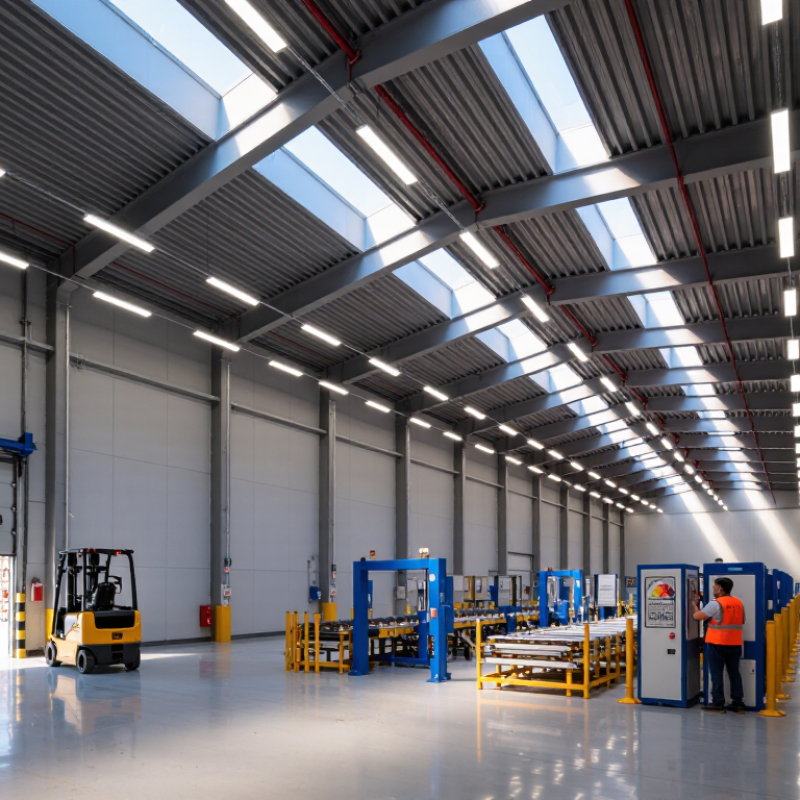
Why Use Smart Lighting Systems in Industrial Environments?

Definition and Core Components of Industrial Smart Lighting

Industrial smart lighting is a connected lighting system designed for factories, warehouses, workshops, and logistics areas. Unlike ordinary fixed lamps, it combines efficient fixtures with sensors, controls, and operating data. The system can respond to movement, daylight, schedules, and safety conditions. In a warehouse aisle, lights may brighten when a forklift approaches and dim after the area is empty. This simple change can improve visibility while reducing unnecessary energy use.

The core components begin with industrial LED luminaires, selected for dust, moisture, vibration, and temperature exposure. Occupancy sensors detect people or vehicles, while daylight sensors measure natural light near windows or loading doors. A central controller applies lighting rules, and a secure communication network carries commands between devices. Management software displays energy consumption, faults, runtime, and maintenance alerts. Emergency lighting and manual override controls remain essential because automation should not remove human judgment. Keep controls accessible.

From field experience, installation quality often matters more than advanced software. A poorly positioned sensor can leave a workbench dark or trigger lights constantly. Network interruptions can also delay commands, so local fallback settings are valuable. Regular testing should include dusty corners, high-bay shadows, and emergency conditions. No system is perfect. Operators may distrust automated changes if the interface is unclear. Clear permissions, readable dashboards, and documented maintenance procedures make the system more dependable.

How Smart Lighting Systems Operate in Industrial Environments

In an industrial environment, smart lighting begins with connected fixtures, sensors, and control software. Occupancy sensors detect workers moving through production zones, aisles, and storage areas. Daylight sensors measure incoming sunlight near windows or loading doors. The system then adjusts brightness according to activity, time, and available daylight. Quiet areas can remain dimmer. Active workstations receive stronger illumination.

Lighting controllers divide the facility into manageable zones. A gateway collects sensor readings and sends instructions through a secure network. Supervisors can set schedules, minimum brightness levels, and emergency operating modes from a central interface. Manual switches remain important when workers need immediate control. The system can also record operating hours, temperature changes, and unusual power use. Maintenance teams may receive an alert when a fixture shows repeated faults.

Small details affect performance. A blocked sensor can leave an aisle dark. Dust may reduce detection accuracy. Glare can still trouble machine operators, even when energy use falls. Regular inspections, calibration, and worker feedback help correct these weaknesses. Data should support decisions, not replace professional judgment. Operators should test lighting during night shifts, equipment changes, and seasonal daylight variations. A practical trial often reveals problems that a digital dashboard misses. Safety requirements must guide every brightness adjustment, especially around moving machinery and inspection points.

Key Benefits for Industrial Safety, Efficiency, and Productivity

Smart lighting systems improve industrial safety by keeping critical areas consistently visible. In a loading bay, clear illumination can reveal wet floors, moving vehicles, and damaged packaging. Occupancy sensors can also light low-traffic aisles before workers enter them. However, automation is not a safety guarantee. Glare, shadows, poor sensor placement, and delayed maintenance can still create hazards. Lighting must support risk assessments, worker feedback, and established occupational-safety requirements.

Efficiency gains are measurable. The International Energy Agency reports that lighting uses about 15% of global electricity. A Lawrence Berkeley National Laboratory meta-analysis found average lighting-energy savings of 24% from occupancy controls in commercial buildings. Industrial results vary with ceiling height, operating hours, and sensor calibration. That limitation matters. A dusty sensor may miss a worker in a remote aisle. Manual overrides should remain available during inspections, repairs, and emergencies.

Productivity also depends on visual comfort. Stable light levels can help operators read labels, inspect welds, and monitor control panels with fewer interruptions. The Illuminating Engineering Society recommends selecting illuminance, glare control, and color quality for each task, rather than using one setting everywhere. Some facilities overstate productivity benefits because direct measurement is difficult. A better approach tracks inspection errors, near misses, maintenance calls, and energy use before and after installation. Small evidence beats impressive dashboards.

Common Applications Across Industrial Facilities

Smart lighting systems serve different purposes across industrial facilities. In warehouses, occupancy sensors brighten aisles when workers enter and reduce output during quiet periods. Daylight controls can dim fixtures near roof windows while maintaining safe visibility. This matters during long shifts, when small energy savings accumulate across hundreds of luminaires.

Manufacturing floors need consistent light around machines, inspection benches, and assembly lines. Tunable settings can support detailed visual work without flooding unused areas. At loading docks, scheduled lighting improves visibility during early deliveries and night dispatches. Motion detection also helps in stairwells, service corridors, and equipment rooms. Cold storage facilities present another challenge. Controls must function reliably despite low temperatures, condensation, and limited maintenance access. Enclosures and installation methods should match the environment, not just the lighting plan.

Parking areas and perimeter paths benefit from adaptive dimming, especially when traffic is predictable. However, automation is not always perfect. A sensor may miss a worker behind stacked materials, or dimming may create uncomfortable transitions. The first control map is rarely final. Facility teams should test zones during real shifts, review incident reports, and adjust timing carefully. Manual overrides remain useful during maintenance, emergencies, and unusual production schedules. Reliable systems also record energy and operating data, helping managers compare expected savings with actual performance. That evidence supports practical decisions, although it may reveal that some areas need better wiring, clearer zoning, or more frequent cleaning.

Why Use Smart Lighting Systems in Industrial Environments? - Common Applications Across Industrial Facilities

Industrial Application Common Lighting Challenge Smart Lighting Features Typical Energy-Saving Potential* Additional Operational Benefits
Warehouses and Distribution Centers Long operating hours, high ceilings, and aisles that are often unoccupied. Occupancy-based aisle control, task zoning, scheduled dimming, and daylight harvesting near skylights or windows. 20%–60% Improved visibility for picking and storage activities, fewer dark zones, and easier monitoring of lighting faults.
Manufacturing and Assembly Areas Different workstations require different illumination levels, while production schedules vary by shift. Zone-based dimming, shift scheduling, task-light integration, and centralized control of production areas. 15%–40% More consistent task visibility, reduced glare, and lighting levels that can be matched to process requirements.
Cold Storage and Refrigerated Facilities Low temperatures, limited occupancy, and frequent door opening can make maintenance difficult. Low-temperature-rated luminaires, motion sensors, occupancy scheduling, and remote fault alerts. 20%–50% Reduced time spent in unoccupied zones, better visibility during loading activity, and fewer manual inspections.
Loading Docks and Shipping Areas Lighting demand changes throughout the day and must support vehicle, pedestrian, and material movement. Presence detection, daylight response, time-based scenes, and separate control of dock doors and staging zones. 25%–60% Better visibility around vehicles and dock edges, improved nighttime safety, and reduced lighting during idle periods.
Parking Areas and Perimeter Zones Outdoor areas require lighting after dark even when pedestrian and vehicle activity is intermittent. Astronomical scheduling, motion-triggered light increases, adaptive dimming, and centralized outdoor monitoring. 30%–70% Maintains baseline security lighting while increasing illumination when movement is detected.
Cleanrooms and Controlled Environments Strict operating procedures, limited access, and the need for stable illumination in controlled work areas. Preset lighting scenes, access-controlled adjustments, low-flicker fixtures, and scheduled operation. 10%–30% Consistent visual conditions, reduced unnecessary operation, and better support for documented facility procedures.
Utilities, Mechanical Rooms, and Service Areas Spaces may remain unoccupied for long periods but require reliable light during inspections and maintenance. Occupancy sensors, local override controls, maintenance alerts, and low-level standby lighting. 20%–50% Lights activate when technicians enter, while remote monitoring helps identify failed fixtures before scheduled maintenance.
*Note: The energy-saving percentages are indicative ranges commonly associated with combining LED lighting, occupancy controls, scheduling, and daylight dimming. Actual results depend on operating hours, existing equipment, control settings, daylight availability, facility layout, and user behavior.

Implementation Factors, Challenges, and Maintenance Requirements

Smart lighting systems can improve visibility, energy control, and worker comfort in industrial environments. However, successful implementation requires more than replacing old fixtures.

A site assessment should examine ceiling height, dust levels, heat, vibration, operating hours, and existing electrical circuits.

In plant assessments, I have seen poorly positioned sensors switch lights off near active work areas. That creates safety concerns and weakens user trust.

Tips: Map work zones carefully. Measure light levels at task height. Use industrial-rated fixtures. Test sensors during real production. Keep manual overrides available.

Integration also needs practical planning.

Lighting controls may connect with occupancy sensors, scheduling software, or building management systems. Wireless signals can struggle around metal structures and heavy machinery. Control panels should be protected, labelled, and accessible to trained technicians. Local electrical requirements and emergency-lighting rules must guide the design. Pilot testing is valuable, but one test zone may not represent the entire facility.

Maintenance is often underestimated.

Dust can cover lenses and reduce usable light. Heat can shorten component life, while vibration may loosen connections. Maintenance teams should follow inspection schedules, clean fixtures safely, check sensor accuracy, and record failures. Spare units and compatible components reduce downtime. I have found that automated alerts are useful, but they are not perfect. A failed sensor may remain unnoticed if nobody reviews the system reports. Clear ownership matters. Workers should also report flickering, glare, and delayed switching instead of adapting silently.

FAQS

What is industrial smart lighting?

It is a connected lighting system for factories, warehouses, workshops, and logistics areas. It uses fixtures, sensors, controllers, networks, and management software.

How does smart lighting respond to activity?

Occupancy sensors detect workers or vehicles. Lights can brighten when a forklift enters an aisle and dim after it leaves.

What conditions should industrial lighting equipment withstand?

Fixtures should match dust, moisture, vibration, condensation, and temperature conditions. Cold storage areas need especially reliable equipment and suitable enclosures.

How can smart lighting improve workplace safety?

Clear illumination can reveal wet floors, moving vehicles, damaged packaging, and machine details. Still, lighting alone cannot guarantee safety.

Can automated lighting create problems?

Yes. Poor sensor placement may leave a workbench dark or trigger lights repeatedly. Glare, shadows, delayed commands, and uncomfortable dimming can also create risks.

Why are manual overrides and emergency lighting still necessary?

Automation may fail during network interruptions, unusual shifts, repairs, or emergencies. Workers need accessible controls and reliable emergency lighting.

Where is industrial smart lighting commonly used?

Common areas include warehouse aisles, manufacturing floors, loading docks, stairwells, corridors, equipment rooms, and parking paths. Each area needs different lighting rules.

How much energy can occupancy controls save?

Results vary with operating hours, ceiling height, zoning, and calibration. One cited analysis found average savings of 24% in commercial buildings. Industrial results may differ.

How should a facility measure performance after installation?

Compare energy use, inspection errors, near misses, maintenance calls, and runtime before and after installation. A bright dashboard is not enough.

What makes an industrial lighting system dependable?

Good installation, clear permissions, readable dashboards, local fallback settings, and regular testing matter greatly. The first control map is rarely final.

Conclusion

Industrial smart lighting systems combine energy-efficient LED fixtures, sensors, wireless controls, centralized software, and data-monitoring tools to create a responsive lighting network. By detecting occupancy, movement, daylight levels, and operating schedules, these systems automatically adjust brightness and switch lights on or off according to real-time conditions. Understanding how smart lighting systems work in industrial environments helps facility managers improve visibility while reducing unnecessary energy use and manual control.

These solutions support safer, more productive workplaces by providing consistent illumination in production areas, warehouses, loading zones, corridors, and emergency routes. They can reduce operating costs, improve maintenance planning, and provide useful performance data through remote monitoring. Successful implementation requires assessing facility layouts, environmental conditions, network reliability, system compatibility, installation costs, and employee needs. Regular inspections, software updates, sensor calibration, and prompt repairs are also essential to maintain dependable performance and long-term value.

Amelia

Amelia

Amelia is a seasoned marketing professional with a wealth of expertise in our company’s core offerings. With an unwavering passion for driving growth and innovation, she plays a pivotal role in shaping our marketing strategies and enhancing brand visibility. A key aspect of her responsibilities......