Choosing LED lighting from China requires more than comparing numbers on a product sheet. Buyers often ask, “what is lumen vs watt in led lighting?” The answer affects brightness, energy costs, product quality, and customer satisfaction.
Lumens measure the visible light produced by a lamp. Watts measure electrical power consumption. A traditional 60-watt incandescent bulb may produce about 800 lumens. A quality LED can deliver similar brightness using only 8 to 10 watts. That difference explains why wattage alone cannot identify a brighter LED fixture.
Lighting engineer James Benya is widely associated with practical lighting education. His useful explanation is: “Lumens describe light output, while watts describe power consumption.” This principle remains valuable when evaluating China LED lighting suppliers, retrofit bulbs, floodlights, panels, and commercial high-bay fixtures.
The comparison is not always tidy.
Two 100-watt LED lights may produce different lumen outputs. Their beam angles, color temperatures, optics, and thermal designs can also change how bright a room feels. A cool-white fixture may appear sharper, while a warm-white product can feel softer, even with similar lumen ratings.
Reliable buyers should examine delivered lumens, efficacy, color rendering, LED chip quality, driver performance, and test documentation. Look for details from recognized testing systems, such as LM-80 data and independent photometric reports. Packaging claims can be incomplete. Sometimes, they are optimistic.
This guide explains how lumens and watts work together. It also shows how to compare Chinese LED manufacturers without confusing lower power with lower performance. Practical examples will help you select efficient lighting that remains dependable after installation.
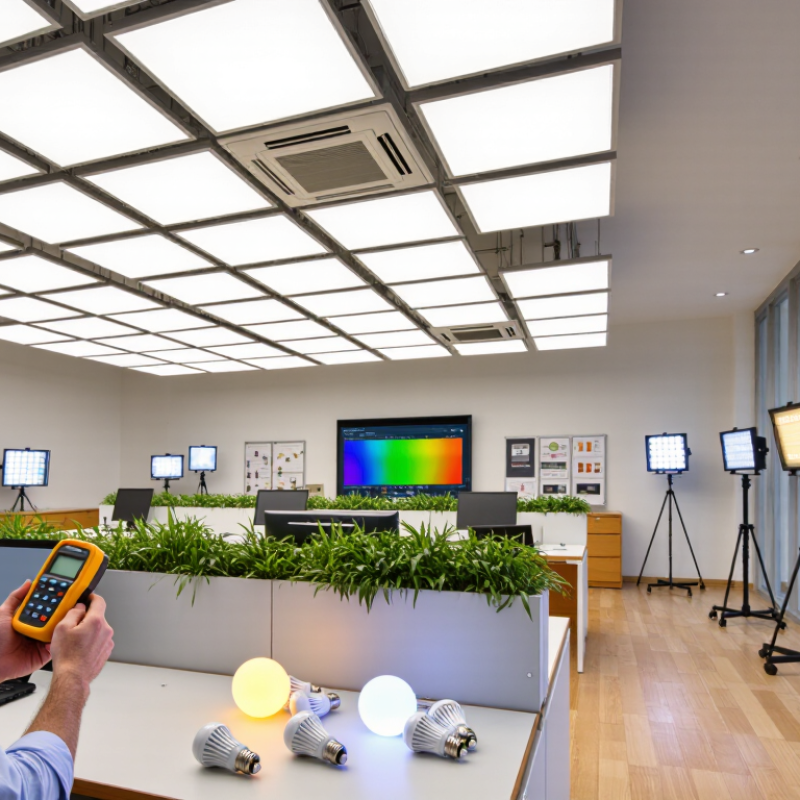
Lumens and watts measure different things in LED lighting. Lumens show visible light output, while watts show electricity consumption. A 10-watt LED producing 1,000 lumens is more efficient than a 15-watt LED producing the same output. That is the trap. Buyers often compare wattage alone, although it cannot confirm brightness.
The U.S. Department of Energy reports that LED products can use up to 90% less energy and last up to 25 times longer than incandescent lamps. Its solid-state lighting research also records modern LED package efficacies above 150 lumens per watt under controlled conditions. Real installations usually deliver less. Heat, lens design, driver quality, and airflow reduce performance. The International Energy Agency has reported that lighting represents roughly 15% of global electricity consumption, making efficiency meaningful at building scale.
For a warehouse, measure delivered lumens at the working surface, not only the lamp rating. A high-bay fixture may list 24,000 lumens, yet poor beam control can leave dark aisles and bright ceiling areas. Color temperature and color rendering also affect how bright a space feels. In practical projects, I would check illuminance with a calibrated meter after installation. Calculations alone can be optimistic. Also, wattage can rise when drivers age or operate in hot conditions. This detail is easy to miss. A fair comparison should include lumens, watts, lumens per watt, beam angle, maintenance needs, and measured illumination.
Lumens describe how much visible light a lamp produces. Watts describe how much electricity it consumes. For LED lighting, lumens are the better starting point when comparing brightness. A typical 800-lumen LED lamp can replace an incandescent lamp using about 60 watts, according to the U.S. Department of Energy’s Energy Saver guidance. The LED may use only 8 to 12 watts.
The numbers matter. The U.S. Department of Energy’s solid-state lighting reports show that modern LED packages can exceed 180 lumens per watt under laboratory conditions. Real products often perform below that level because of drivers, heat, lenses, and housing design. That difference is easy to miss. A 1,000-lumen fixture does not always look equally bright in every room.
Beam angle changes the result. A narrow 24-degree beam can make a countertop look intense, while a wide 120-degree beam spreads the same lumens across a larger area. Diffusers also reduce measured output, sometimes noticeably. In practical lighting checks, compare lumens, beam angle, mounting height, and color temperature together. The International Energy Agency has repeatedly identified efficient lighting as a major electricity-saving opportunity, but efficiency alone cannot guarantee visual comfort. I would not judge a fixture from wattage or lumens alone. The label is useful, yet incomplete.
Watts measure electrical power, not brightness. A 10-watt LED fixture consumes electricity at a rate of 10 watts while operating.
Lumens describe the visible light produced. This distinction matters when selecting efficient lighting for factories, warehouses, and homes.
The U.S. Department of Energy reports that modern LED products can achieve more than 100 lumens per watt, although real performance varies with optics, drivers, temperature, and installation. A 10-watt LED used five hours daily consumes about 18.25 kilowatt-hours annually. Multiply that figure by the local electricity rate to estimate operating cost.
Consider a replacement example.
A 10-watt LED may provide around 800 lumens, similar to a traditional 60-watt incandescent lamp. ENERGY STAR states that certified LED bulbs use at least 75% less energy and can last up to 25 times longer than incandescent bulbs. The saving is measurable.
The label still invites a common mistake. Higher wattage does not automatically mean brighter light. A poorly designed 15-watt fixture may produce less useful illumination than a well-engineered 10-watt product. In practical lighting audits, beam angle and mounting height can change perceived brightness significantly.
I would also avoid treating laboratory efficacy as a guarantee. Dust, heat, voltage variation, and aging can reduce field performance. The International Energy Agency identifies lighting efficiency as an important pathway for reducing electricity demand, but product selection remains only part of the calculation. Check lumens first, then watts, lifetime, color quality, and application conditions. Tens of watts can become thousands of kilowatt-hours across a large project.
When comparing LED lighting, lumens matter more than watts for selection. Lumens measure the visible light produced. Watts measure electricity consumed.
That difference reduces energy use without making the room darker.
I have seen buyers choose LEDs by wattage alone, then complain about weak lighting. This approach is understandable, but incomplete. Check the lumen rating first, especially for kitchens, workshops, and outdoor areas.
A lamp with more lumens is not always better. Beam angle, color temperature, and room size also change how bright it feels. A narrow beam can look intense on one surface and leave nearby corners dim.
I once underestimated this effect in a small office. The specification was correct, but the placement was poor.
Match lumens to the task, not just the fixture. For a general room, compare total lumens from all lamps. Check the package for wattage, color temperature, and beam angle. If possible, test one unit before ordering many. Real spaces are less predictable than product tables.
China’s leading LED lighting products are better compared by lumens than watts. Lumens measure visible light output, while watts measure electrical power consumption. A 12-watt LED lamp producing 1,200 lumens delivers about 100 lumens per watt. That figure helps buyers judge efficiency more fairly.
In practical product evaluations, LED panels, high-bay fixtures, and streetlights often show different lumen-to-watt ratios. A compact panel may provide 100–120 lumens per watt, while a well-designed high-bay fixture can exceed 150 lumens per watt. These figures depend on the driver, lens, heat management, and operating temperature. Check the tested lumens, not only the LED chip rating. The difference can be substantial.
Color temperature, color rendering, beam angle, and lifetime also affect performance. A 150-watt fixture may appear weaker if its lens spreads light poorly. Likewise, a high lumen claim means little without test conditions or maintenance data. Reliable suppliers should provide photometric reports, electrical specifications, and warranty terms. Independent testing adds confidence, especially for large commercial projects.
I have found that wattage remains useful for estimating energy costs, but it should not lead the comparison. Lumens describe the result people see. Watts describe what the fixture consumes. Still, efficiency is not everything. A slightly lower-lumen product may create better uniformity and less glare. That trade-off is easy to miss, and it deserves careful review.
Lumens measure visible light output. More lumens usually mean more light. A dark aisle may still need better beam control.
Watts measure electrical power consumption, not brightness. A 10-watt fixture uses electricity at a 10-watt rate. Watts are not brightness.
Yes. A well-designed 10-watt LED can produce more useful light than a poor 15-watt fixture. Compare lumens, not watts alone.
Divide lumens by watts to find lumens per watt. Higher values usually indicate better energy efficiency. Real installations may perform worse.
Used five hours daily, it consumes about 18.25 kilowatt-hours each year. Multiply this figure by your local electricity rate. Small loads become significant.
Beam angle, mounting height, and lens design affect delivered illumination. A ceiling may look bright while work surfaces remain dark. Measure light where work happens.
No. Heat, dust, airflow, voltage changes, and aging can reduce field performance. Laboratory results may be optimistic. I would verify performance after installation.
Check lumens, watts, lumens per watt, beam angle, lifetime, color quality, and maintenance needs. Use a calibrated meter for important projects. The meter may reveal surprises.
Understanding what is lumen vs watt in led lighting is essential when choosing efficient and effective LED products. Lumens describe the amount of visible light a lamp produces, so a higher lumen rating generally means greater brightness. Watts, however, measure electrical power consumption rather than light output. Traditional lighting often used watts as a rough guide to brightness, but LED technology produces more light with less energy, making this comparison less reliable.
For LED selection, lumens should be the primary factor when evaluating brightness, while watts help estimate energy use and operating costs. Comparing LED lighting products by both measurements allows buyers to identify options that provide suitable illumination with lower power consumption. China’s leading LED lighting products can vary in their lumen output and wattage, so reviewing both specifications helps users select the right balance of brightness, efficiency, lifespan, and value for homes, offices, commercial spaces, and outdoor applications.

Lume Light