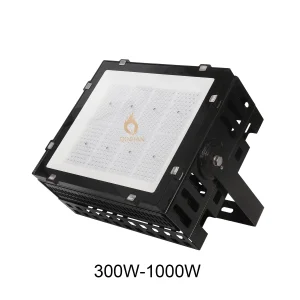
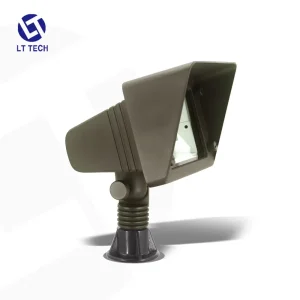
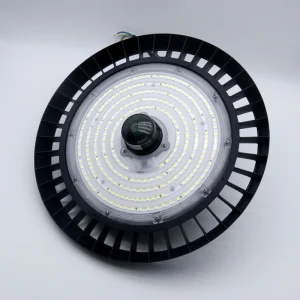
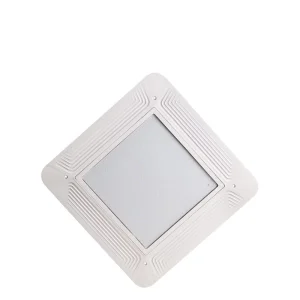
A comprehensive analysis of design methodologies, supply chain dynamics, and performance metrics for global project procurement.
Modern commercial and industrial LED ceiling luminaires demand system-level efficacy exceeding 150 lm/W to 210 lm/W. Elevating luminous density while minimizing thermal resistance at the junction level allows large-scale operations to slash power grid demand by up to 65% compared to legacy high-intensity discharge (HID) configurations.
Thermal degradation is the leading vector of LED driver and chip failures. Premium Chinese manufacturers incorporate high-grade die-cast aluminum alloys (ADC12) with advanced aerodynamic fin structures, maintaining junction temperatures below 75°C to assure an L70/B10 operational life exceeding 100,000 hours.
By engineering advanced micro-prismatic diffusers and customized beam angles (from narrow 30° spot profiles to ultra-wide 120° flood patterns), manufacturers minimize glare index metrics (UGR < 19) to optimize visual acuity, prevent eye fatigue, and meet stringent safety codes in industrial plants and commercial garages.
Analyzing the unparalleled engineering ecosystem, manufacturing density, and cost-to-performance ratio of Chinese lighting hubs.
The concentration of critical component manufacturers—ranging from SMT packaging lines, precision die-casting foundries, to specialized driver manufacturers—allows rapid prototyping, massive output capacity, and unparalleled optimization of build materials.
Leading Chinese exporters have shifted away from manual assembly, integrating automated SMT pick-and-place machinery, automated optical inspection (AOI), and dynamic testing systems to ensure defect-free manufacturing of LED arrays and driver circuits.
Established exporters design, test, and qualify ceiling lights to global regulatory norms. Products are routinely certified under TUV, CE, RoHS, CB, SAA, FCC, and DLC, enabling seamless customs clearance and deployment in highly regulated markets.
Tailored lighting architectures optimized for challenging industrial environments, commercial corridors, and heavy-use public spaces.
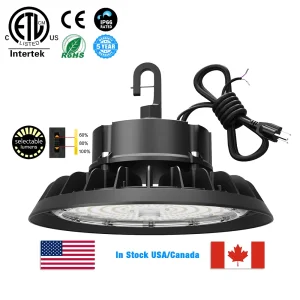
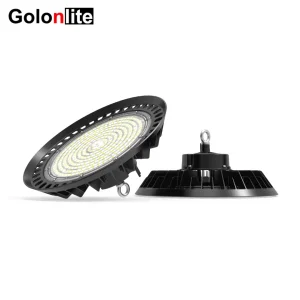
High-bay ceiling systems integrated with motion and daylight sensors optimize light output dynamically. Low-temperature resistant drivers ensure continuous startup performance down to -40°C in modern cold-chain facilities.
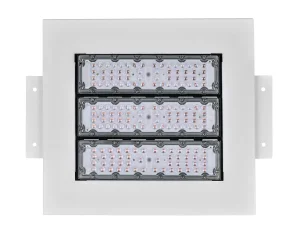
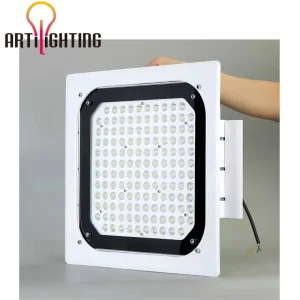
Explosion-proof, surface-mounted LED canopy lights provide glare-free, high-intensity illumination. Sealed structures are engineered to handle exposure to volatile gases, high ambient humidity, and high-pressure water washdowns.
Designed for public transport terminals, subway stations, and public institutions where failure is not an option. These products utilize IK08/IK10 impact ratings to resist vandalism and external impacts.
A trusted global supplier delivering energy-efficient, durable, and high-performance industrial lighting products.
Shanghai Lume Light Co., Ltd. has grown into a reliable LED lighting manufacturer, specializing in industrial, area, and garden lighting solutions for global markets. Since its establishment, the company has focused on delivering energy-efficient, durable, and high-performance lighting products that meet the evolving needs of commercial and industrial applications.
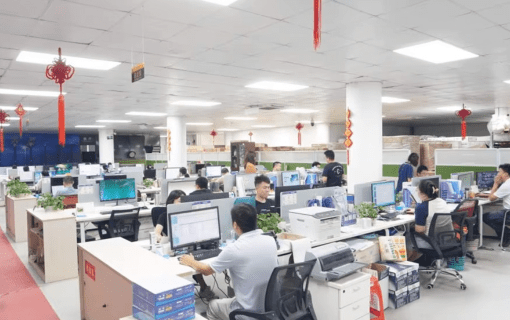
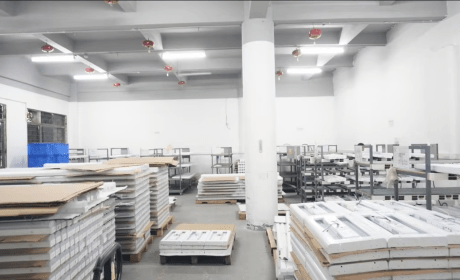
Based in Shanghai, a major international business and technology center, Lume Light benefits from strong supply chain resources and advanced manufacturing capabilities. The company operates a modern production facility equipped with automated assembly lines and strict quality control systems, ensuring consistent product performance and reliability.
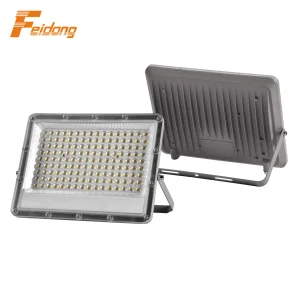
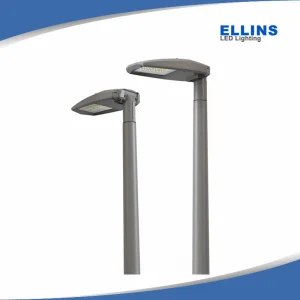
Over the years, Shanghai Lume Light has expanded its product portfolio to include industrial lighting systems for factories and warehouses, high-efficiency area lighting for large outdoor spaces, and decorative yet functional garden lighting solutions. Its products are widely used in infrastructure projects, commercial complexes, and landscape lighting applications.
Driven by innovation and sustainability, the company continues to invest in research and development, integrating smart lighting technologies and energy-saving designs. With a commitment to quality and customer satisfaction, Shanghai Lume Light Co., Ltd. is steadily strengthening its global presence and providing efficient, future-ready LED lighting solutions worldwide.
Evaluating how smart control integration, spectral quality, and sustainability regulations are redefining global lighting protocols.
Modern workplaces prioritize biological health. Tunable white technology adjustments dynamically change color temperatures (CCT) from warm 2700K to cool 6500K, mirroring the natural solar cycle to enhance biological circadian rhythm, boost focus, and lower error rates in processing facilities.
Intelligent lighting control protocols, particularly DALI-2 (Digital Addressable Lighting Interface) and wireless mesh architectures (Zigbee, Matter), enable full software-controlled diagnostic monitoring, automated scheduling, and power-consumption metrics reporting.
With tightening environmental mandates globally, high-power ceiling luminaires must feature modular repairability profiles. Easily hot-swappable drivers and accessible LED gear trays minimize environmental electronic waste, aligning with Net-Zero ESG target structures.
Critical considerations, verification protocols, and technical answers compiled by our senior growth and project engineering divisions.
The LED driver is the most critical failure point in high-intensity lighting systems. Premium industrial solutions utilize top-tier drivers (such as MeanWell, Inventronics, or Lifud) which feature high surge protection (typically ≥ 4kV to 10kV line-to-line/line-to-ground), excellent power factor correction (≥ 0.95), and extremely low total harmonic distortion (THD < 10%). Cheap drivers with lower quality electrolytic capacitors will dry out prematurely when subjected to high ceiling heat loads, causing light flickering and immediate driver failure well before the LED chips run out of their rated life.
Buyers must insist on verified lab certifications depending on their target region. For North America, look for UL/cUL listing or ETL certification, along with DLC (DesignLights Consortium) classification for power utility rebate eligibility. In Europe, CE (LVD and EMC directives), RoHS compliance, and CB schemes are essential. Australian and New Zealand projects require SAA and RCM verification. Testing reports must originate from ISO 17025 accredited labs and include native LM-79 (photometric performance), LM-80 (lumen maintenance tracking), and ISTMT (thermal junction measurements).
Unified Glare Rating (UGR) is an empirical formula evaluating the psychological glare of a light source in an indoor application. For office work and educational rooms, a UGR ≤ 19 is mandated by international standards (such as EN 12464-1) to reduce head strain and preserve worker output. Industrial spaces can sometimes tolerate UGR values of 22 to 25. To achieve UGR ≤ 19, premium fixtures employ specialized prismatic PMMA/PC diffusers or internal parabolic louvers that structure distribution angles and cut off horizontal glare paths.
Edge-lit panels utilize light guides that inject light sideways, bouncing it downwards to provide a slim profile (often under 10mm). Direct-lit panels position the LED chips directly behind the optical diffuser. Edge-lit models offer higher aesthetic appeal and uniform illumination, but are generally less efficient because of light absorption in the light guide plate. Direct-lit systems run cooler and are more cost-effective and efficient (often reaching 130-150 lm/W) but require slightly deeper structural enclosures (typically 30-40mm) to prevent "yellowing spot" issues over long operating horizons.
IP (Ingress Protection) ratings define protection against solids and liquids. An IP65 fixture is completely dust-tight and protected against water jets, making it the minimum requirement for humid environments like parking structures, canopy zones, and food processing plants. IK ratings (e.g., IK08, IK10) measure mechanical impact resistance in Joules. IK10 means the fixture can absorb 20 Joules of direct impact, which is essential in sports gyms, correctional centers, high-traffic corridors, and heavy industrial processing zones where high physical hazards exist.
Yes. Leading Chinese manufacturers are deeply integrated with global energy grids. Standard exports operate on universal range input (AC100-277V). However, for heavy-duty industrial sites in Canada (347VAC) or the United States (480VAC), professional manufacturers supply high-voltage driver assemblies (AC347-480V or customized step-down autotransformers). This custom engineering eliminates the need for expensive secondary site transformers, saving massive layout cost during localized infrastructure upgrades.
 Lume Light